The global technological landscape is undergoing a fundamental transformation, one where raw computing power is no longer the sole benchmark of progress. In the era of generative AI, memory has emerged as the primary bottleneck and, simultaneously, the central engine of economic growth. Gartner analysts forecast an unprecedented surge in sector revenues, which are poised to breach the psychological threshold of one trillion dollars. This trend signals a profound structural shift within the semiconductor industry.
The contemporary semiconductor landscape is exhibiting dynamics that, only a few years ago, would have been dismissed as anomalous. The primary catalyst is the meteoric rise of neural networks and Large Language Models (LLMs), which demand massive capacities of high-speed memory for data processing. With industry leaders openly acknowledging an inevitable component shortage lasting through 2027, the market is entering a phase of aggressive price escalation.
Total revenue for the semiconductor sector is witnessing a remarkable surge: while growth from $809 billion to $1.55 trillion (a 92% increase) is expected this year, that figure is projected to approach the $2 trillion mark by next year. Although growth rates are expected to stabilize over time, the overarching trajectory remains bullish.

Of particular note is the structural shift in consumption. Data centers are evolving from mere infrastructure components into the dominant market force. Their share of total semiconductor revenue is projected to climb from the current 35.6% to over 53% by the end of the decade. This pivot ensures that even previously marginalized market segments are now receiving a powerful impetus driven by the "AI boom."
Setting aside the memory segment, the rest of the semiconductor market is also showing steady growth—rising from $589 billion to $718 billion this year, with a further increase to $864 billion next year. However, against this backdrop, the performance of the memory sector appears almost extraordinary.
Within this segment, we are witnessing a true explosion: DRAM revenues are surging by 246.6%, while NAND flash memory is seeing an impressive 371.9% increase. Collectively, memory revenues for the current year are set to nearly quadruple, leaping from $220 billion to $837.3 billion.
Next year, the industry will cross the historic milestone of $1 trillion. While growth rates may moderate as new production capacities come online and existing lines are optimized, the fundamental demand for memory remains insatiable. The industry is entering an era where access to memory dictates the pace of artificial intelligence evolution, effectively transforming semiconductor wafers into the premier currency of the digital economy.
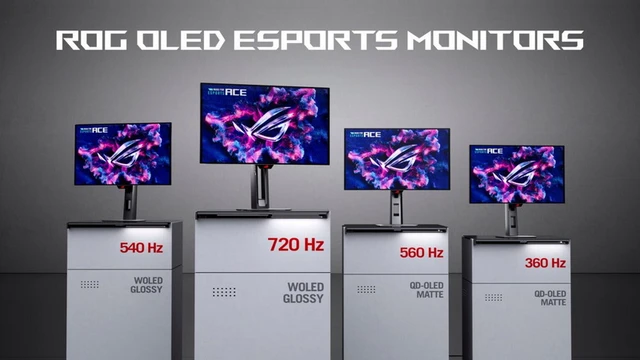 The Speed Limits of Modern Gaming Displays