The mobile industry has entered an era of marginal gains, where the battle is fought over every nanometer of silicon and every stop of dynamic range. The new Vivo X500 series stands as a manifesto of this philosophy, fusing cutting-edge semiconductor technology with uncompromising optics. The focal point is the leap to a 2-nanometer process and the on-device integration of sophisticated neural network models. This is more than a mere iterative update; it is a bold attempt to redefine the frontiers of mobile performance and visual artistry.
The era of silicon stagnation is being dismantled through aggressive node shrinkage, and the Vivo X500 series serves as the primary proving ground for the MediaTek Dimensity 9600 Pro. Developed through a deep synergy between Vivo and MediaTek, this chipset leverages a 2-nanometer process, allowing for the integration of over 33 billion transistors on a single die. The CPU's "2+3+3" architecture is engineered exclusively for high-performance cores; combined with a massive 34.5 MB cache, this delivers a tangible surge in raw power, with single-core and multi-core performance increasing by 17% and 15%, respectively. However, the true breakthrough is in power efficiency: peak consumption in multi-core mode has plummeted by an impressive 61%.
The technological stack is further augmented by LPDDR6 memory and UFS 5.0 storage, effectively elevating the device to the status of a mobile workstation. Of particular note is the integrated NPU, capable of locally processing Mixture of Experts (MoE) models with up to 30 billion parameters. In practical terms, this computational muscle translates into intelligent features such as instantaneous automated video editing, condensing complex post-production workflows into a single touch.
The visual interface features adaptive LTPO 8T panels with a 144Hz refresh rate. The X500 Pro utilizes a 6.36-inch display based on Q11 luminescent material, co-developed with BOE. Circular Polarization 2.0 technology and hardware support for a minimum brightness of 1 cd/m² ensure comfort in any lighting environment, while SGS certification confirms eye safety by minimizing blue light emission.
The Pro Max variant pushes the boundaries further with a 6.85-inch Q11 2K Zeiss Master Color Screen. This model implements a unique automatic brightness adjustment algorithm that guarantees reference-grade color accuracy regardless of ambient lighting—a critical requirement for professional content creation.
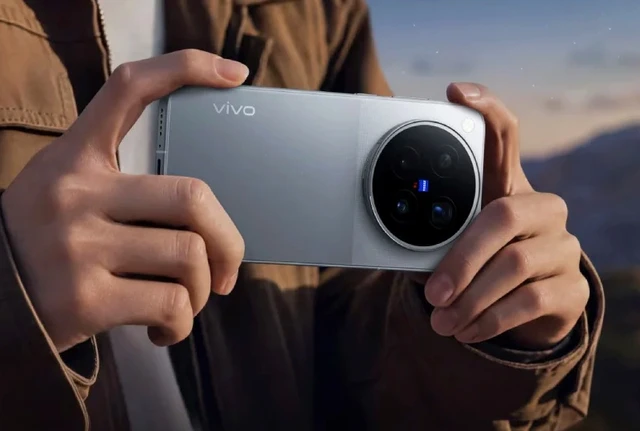
The X series' optical system remains its crowning achievement. The primary module is centered around the BlueTouch 900 sensor with a 50MP resolution, delivering an unprecedented 17-stop dynamic range. This allows for the preservation of intricate detail in deep shadows and bright highlights, even under extreme lighting scenarios. The sensor's efficacy is amplified by a Zeiss Ultra-Dynamic lens, the Vivo VCS 4.0 system, and specialized blue-spectrum absorption glass, which eliminates parasitic flares and distortions.
The telephoto lenses of the two models reflect diverging approaches to zoom. The X500 Pro employs a 64MP Sony LYTIA 610 sensor with an 85mm "golden" focal length, ideal for portraiture. Conversely, the X500 Pro Max is equipped with a monstrous 200MP Zeiss APO super-telephoto lens featuring a 1/1.4” sensor. This setup implements hardware-based 4x ISZ (In-Sensor Zoom), which operates without loss of quality. To stabilize dynamic shots, a comprehensive suite of technologies is deployed: optical tracking, high-speed capture (60 fps), and the NICE algorithmic engine.
Battery endurance has also reached a new echelon. The X500 Pro is equipped with a 6,510 mAh battery, while the Pro Max boasts a colossal 8,000 mAh cell. Both models support 90W wired and 40W wireless charging. For those requiring further capabilities, compatibility with the Zeiss G2 Ultra teleconverter allows the equivalent focal length to be extended up to 400mm.
The series' market rollout begins in China, where various configurations are available. Base versions of the X500 Pro start at 6,499 yuan ($1,044), while the top-tier Creator’s Package for the X500 Pro Max—featuring satellite connectivity and 16GB of RAM with 1TB of storage—is priced at 12,999 yuan ($1,940). The global release and international pricing remain at the manufacturer's discretion.
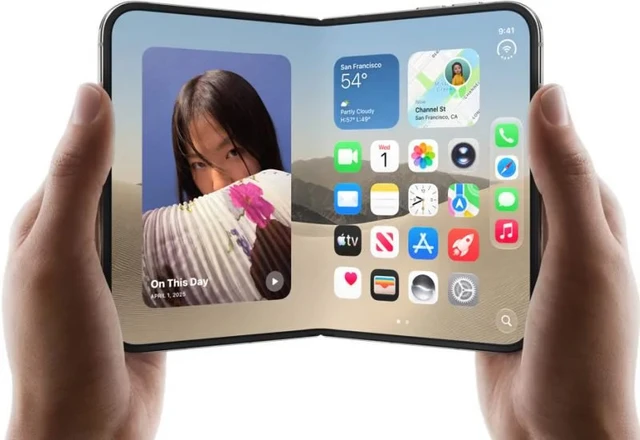 Apple's Strategic Compromises in the Development of the iPhone Duo