The global anthropomorphic systems industry is currently navigating a phase of aggressive, exponential growth—a surge that has effectively morphed into a unilateral expansion. While Western laboratories remain entrenched in the realm of conceptual prototyping, Eastern markets have pivoted decisively toward mass-scale production. This shift toward single-nation dominance has transcended mere market trends, evolving into a profound geopolitical challenge. We are entering an era where the velocity of deployment is becoming far more critical than the act of invention itself.
The contemporary humanoid robotics market is experiencing an exponential surge: total shipments in the first half of this year reached 19,100 units—nearly four times the volume recorded during the same period last year. Yet, beneath these figures lies a profound structural disparity. According to data from Smart Analytics Global, an overwhelming majority—approximately 97%—of these shipments originate from Chinese suppliers. This underscores China's success in cultivating a unique ecosystem capable of translating complex engineering concepts into commercial products with unprecedented velocity.
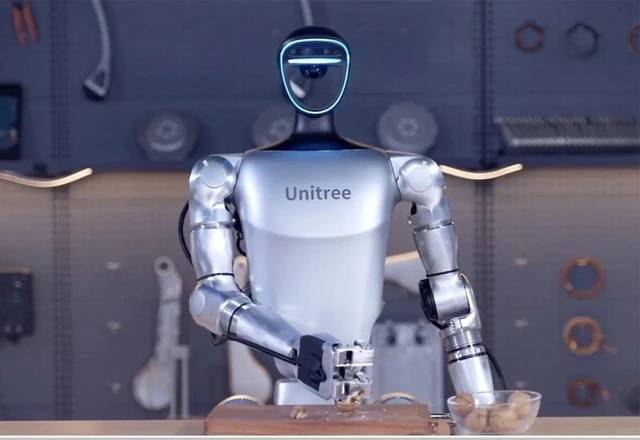
Within this technological leap, new frontrunners are emerging. Agibot has rapidly seized nearly half of the global market, shipping 8,400 units. Its ascent has displaced the former favorite, Unitree, which, despite its own achievements, managed only 5,900 shipments. Meanwhile, American players—including Tesla with its ambitious Optimus project, as well as Figure AI and Agility Robotics—remain in a trailing position. Their approach, characterized by deep R&D and incremental testing, is being outpaced by China's strategy of aggressive scaling.
The primary driver of this dominance has been systemic government backing. Massive subsidies and a favorable regulatory environment have fostered a robust supply chain for components, radically lowering production costs and accelerating product iteration cycles. Consequently, the industry has evolved from showcasing demonstration models to deploying functional industrial assets: while only half of all robots were used for commercial purposes a year ago, that figure has now climbed above 70%. This indicates that anthropomorphic systems are beginning to integrate meaningfully into production chains, replacing human labor in routine and hazardous operations.
However, this technological triumph is inevitably colliding with political friction. The United States is seriously considering import bans on Chinese humanoid and quadruped robots, as well as their critical components. The administration's arguments center on national security imperatives, effectively turning the robotics market into a new theater in the ongoing global tech war.
Forecasts for the coming years remain bullish in terms of volume: shipments are expected to reach 60,000 units by the end of this year and surge to half a million by 2030. Nevertheless, the trajectory of this evolution will no longer be determined solely by engineering prowess or market demand, but by the rigid constraints of geopolitical rivalry and regulatory hurdles.
 The Price of Acceleration: CXMT’s Rapid Push into Memory