Modern mobile photography has evolved beyond the mere pursuit of megapixel counts, entering an era defined by the sophisticated optimization of light-capture physics. Samsung’s new ISOCELL HPC sensor arrives as a direct response to the industry's demand for superior image clarity and an expanded dynamic range. By integrating cutting-edge pixel isolation techniques, the sensor effectively bypasses the inherent physical constraints of small-scale matrices. This technological paradigm shift is set to define the next generation of flagship devices, transforming the smartphone camera into a legitimate tool for professional-grade content creation.
The pursuit of resolution in mobile imaging has long transcended the mere accumulation of pixels. Today, the primary challenge lies in maximizing the utility of every square micron of sensor area. The new 200-megapixel ISOCELL HPC sensor—featuring a 1/1.3-inch physical size and a 0.6μm pixel pitch—continues the trend of high data density while prioritizing a qualitative leap in light sensitivity.
At the heart of this evolution is the DeepPix architecture, implemented via Front Deep Trench Isolation (FDTI) technology. This solution utilizes deep isolation of photodiodes to significantly expand the Full Well Capacity (FWC)—essentially increasing the "reservoir" available for photons. A 60% increase in FWC translates directly into reduced digital noise and enhanced image clarity. This is particularly critical when handling high-contrast scenes, where preserving detail in both deep shadows and bright highlights is paramount.
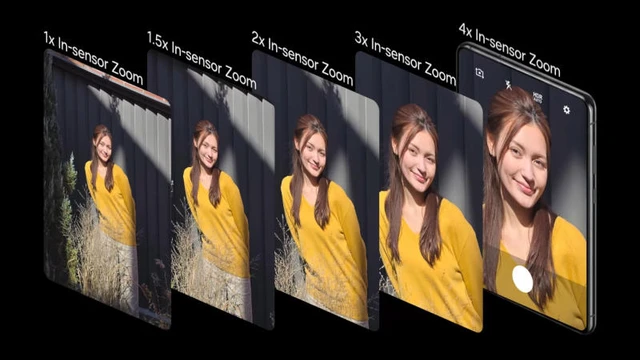
Of particular interest is the approach to sensor-level zoom. The ISOCELL HPC supports single-frame HDR capture at magnification levels ranging from 1x to 4x. This flexibility allows smartphone manufacturers to rethink their camera module configurations. Specifically, it opens the door to phasing out dedicated 3x telephoto lenses in favor of a single, powerful 5x module; thanks to its high resolution and intelligent cropping, the primary sensor can effectively bridge the focal length gap without sacrificing quality.
The sensor's technical capabilities have also received a substantial upgrade for videography. 4K recording is now possible at up to 180 frames per second, significantly expanding the potential for high-quality slow-motion content. For those pushing the limits of resolution, 8K capture at 30 fps is available.
Sensor performance has been optimized for diverse use cases: from ultra-fast burst shooting at 12.5MP (up to 180 fps) to high-fidelity captures in full 200-megapixel mode (7.5 fps). Power users will appreciate the support for native 16-bit RAW as well as RAW10/12/14 formats, providing unprecedented control during post-processing. Focusing precision is handled by the Super QPD (PDAF) system, which minimizes hunting even under challenging lighting conditions.
Samsung’s market strategy involves a tiered distribution of technology between partners and its own flagship products. While leading Chinese OEMs such as Oppo, Vivo, and Xiaomi will gain access to the ISOCELL HPC, the Galaxy S27 Ultra is expected to feature the exclusive HP6 sensor. The latter is slated to introduce LOFIC (Lateral Overflow Integrated Capacitor) technology, which addresses pixel saturation under extreme lighting, pushing dynamic range and color accuracy to a new frontier.
 The Evolution of Apple's Augmented Reality Ecosystem