Wearables have officially evolved beyond the realm of simple accessories, maturing into comprehensive hubs for health and safety monitoring. Google is taking a decisive leap forward in this evolution with the introduction of its fifth-generation smartwatch. The primary focus has shifted toward battery endurance and connectivity resilience in extreme environments. The Pixel Watch 5 embodies the philosophy that a device on the wrist must serve as a mission-critical tool, remaining dependable even where traditional cellular networks fail.
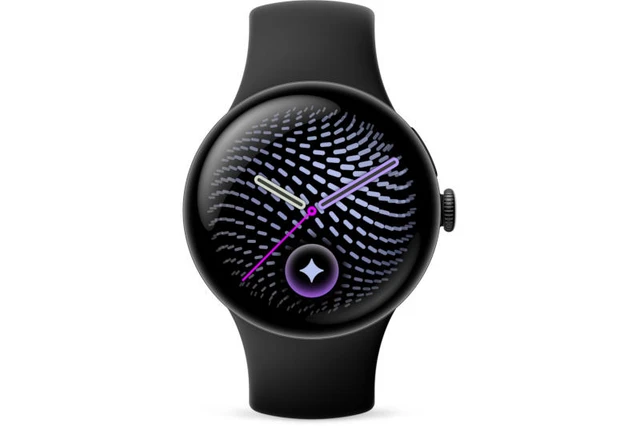
The latest iteration of the Google Pixel Watch arrives in two size variants—41mm and 45mm—allowing users to find the optimal equilibrium between wearability and endurance. The chassis is crafted from recycled aluminum, with the front panel shielded by curved 3D Corning Gorilla Glass 5. The visual experience is anchored by an AMOLED display featuring LTPO technology, enabling a dynamic refresh rate that scales from 1 to 60 Hz. This is pivotal for power efficiency, particularly when utilizing the Always-on Display. Peak brightness reaches an impressive 3,000 nits, ensuring flawless legibility even under direct sunlight, while the minimum threshold drops to 1 nit.
Under the hood, the device leverages a dual-processor architecture: the primary Qualcomm Snapdragon W5 chip paired with an energy-efficient Arm Cortex-M55 co-processor. This configuration ensures that Wear OS 7.0 operates fluidly by offloading background processes to the co-processor to preserve battery life. Storage is handled by a 64GB eMMC drive, providing ample space for offline maps and media content.
Battery longevity has been a persistent pain point for previous generations, and with the fifth version, Google has introduced significant improvements. The smaller model (41mm) is equipped with a 332 mAh battery, delivering up to 30 hours of active use. The larger variant (45mm) features a 465 mAh cell, extending Always-on Display runtime to 40 hours, while the power-saving mode can push operational life up to 72 hours. Charging speeds have also been optimized: using a 30W adapter allows the smaller model to reach 50% capacity in just 15 minutes, while the larger version achieves a full charge within an hour.
The connectivity suite deserves particular attention. Beyond standard dual-band Wi-Fi, Bluetooth 6.0, and NFC, the watch integrates an Ultra-Wideband (UWB) module and supports dual-band satellite navigation. The standout technological leap is the satellite emergency messaging feature. This capability transforms the watch into a critical lifeline in cellular dead zones, providing users with a vital means of summoning help in emergency situations.
The Pixel Watch 5's diagnostic array pushes the device toward clinical-grade monitoring. A multi-channel optical heart rate sensor is complemented by sensors for ECG, blood oxygen saturation (SpO2), skin temperature, and electrodermal activity. Combined with a barometer, altimeter, and magnetometer, this toolkit turns the watch into a powerful instrument for physiological analysis and navigation in challenging terrains. Interaction is handled via the touchscreen, a side button, and a classic rotating crown, further enhanced by support for one-handed contactless gestures.
Google's commitment to sustainability is evident in every component: from the recycled aluminum chassis to the use of secondary gold, copper, and cobalt within the electronics and battery. Even the magnets incorporate recycled rare-earth elements, and the packaging is entirely plastic-free.
In terms of market positioning, Google has implemented a flexible pricing strategy. The base 41mm Wi-Fi model is priced at €419, while the LTE version costs €519. For those opting for the larger 45mm display, prices start at €449 for the Wi-Fi edition and reach €549 for the cellular-enabled variant.
 The Evolution of Apple's Augmented Reality Ecosystem