The contemporary AI arms race has evolved far beyond a mere battle of raw compute. Today, the ultimate strategic asset is the rare intellectual talent capable of charting the evolutionary trajectory of neural network architectures. Noam Shazeer’s defection from Google to OpenAI serves as a watershed moment, exposing the fragility of corporate loyalty in an era of disruptive technological breakthroughs. This move underscores a critical reality: in the quest for LLM market dominance, human capital now outweighs any internal corporate mandate.
The global generative AI industry is currently navigating a period of extreme volatility, where brand loyalty is being eclipsed by raw ambition and the pursuit of the most effective environments for innovation. Noam Shazeer’s departure from Google—where he served as VP of Engineering and was a primary architect of the Gemini family—to join OpenAI is more than a mere career move; it is a strategic realignment of intellectual capital between the market's two dominant titans.
In the realm of machine learning, Shazeer is a figure of fundamental importance. As a co-author of the seminal paper "Attention Is All You Need," he helped lay the groundwork for the Transformer architecture—the very technological bedrock upon which nearly every modern Large Language Model (LLM), including GPT and Gemini, is built. By securing Shazeer, OpenAI has acquired far more than an experienced executive; they have brought on one of the "founding fathers" of the current AI paradigm.
Shazeer’s trajectory between these corporations resembles a complex iterative cycle. In 2021, he exited Google to co-found Character.AI with Daniel De Freitas, focusing on personalized chatbots. However, by August 2024, he had returned to his roots, reintegrating into the Google DeepMind structure. The fact that this second tenure was so fleeting suggests either a profound internal crisis in Google’s talent management or an incredibly aggressive and seductive recruitment strategy by OpenAI.
This talent migration occurs at a critical juncture for Google. The company has just unveiled updated tools, including the Gemini 3.5 Flash model and the Gemini Spark AI agent. Losing a lead engineer during the deployment phase of new products could create a leadership vacuum in technical direction and potentially throttle the pace of iteration.
In a broader sense, this situation illustrates the "war for talent," where corporate boundaries are becoming increasingly porous. In the Deep Tech sector, traditional contracts and corporate ethics are taking a backseat to the opportunity to work with the most advanced datasets and compute clusters. Shazeer’s move to OpenAI underscores the latter's drive to consolidate the industry's key visionaries around itself, cementing its status as the technological hegemon in the transition from simple chatbots to fully autonomous agents.

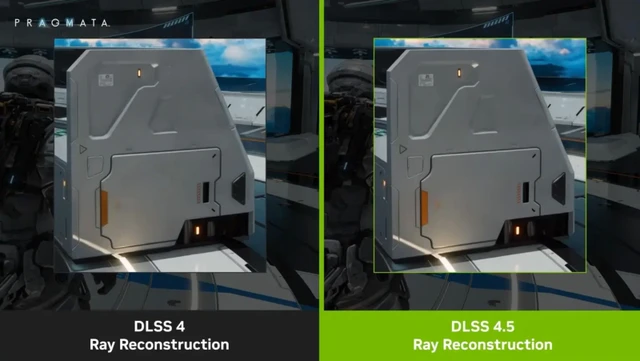 The Evolution of Rendering in DLSS 4.5