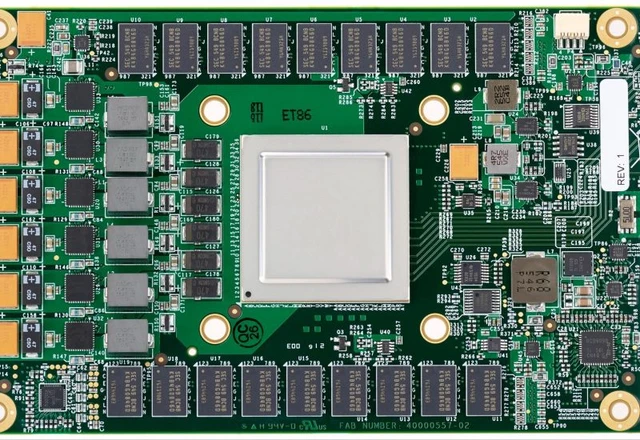
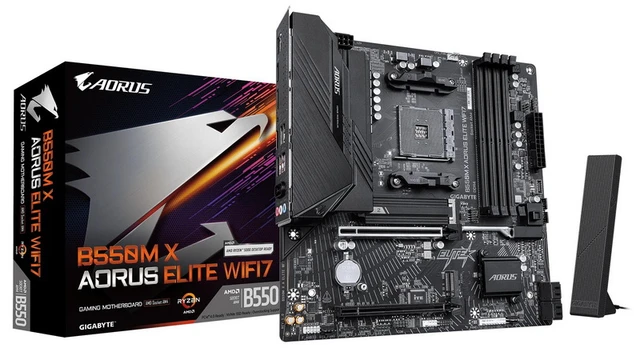
The AI boom has triggered an unprecedented surge in demand for high-speed DDR5 memory, effectively pushing previous standards to the periphery. However, within the vast ecosystem of global data centers, the wholesale abandonment of legacy hardware is neither economically viable nor environmentally sustainable. Meta has countered this challenge with an elegant engineering solution, transforming a technological divide into a strategic hybrid advantage. The company has developed a method to integrate DDR4 modules into server architectures originally engineered exclusively for the latest standard.
The industry's migration to the DDR5 standard has become an inevitability, dictated by the escalating bandwidth requirements of modern computational workloads. However, this rapid transition has created a distinct imbalance: while the market is plagued by shortages and the high cost of new modules, vast arrays of DDR4 memory remain underutilized in decommissioned servers. In response, Meta has adopted a strategy of technological pragmatism, eschewing simple disposal in favor of developing a sophisticated hybrid system.
The linchpin of this architecture is the Compute Express Link (CXL) interface—an open interconnect standard that enables the expansion of memory and accelerator resources via the PCIe bus. Meta's engineers developed the Vistara controller, a specialized CXL 2.0-compliant device. This hardware acts as an intelligent bridge, allowing DDR4 modules to be integrated into systems powered by the latest AMD Epyc "Turin" processors, which natively support only DDR5.
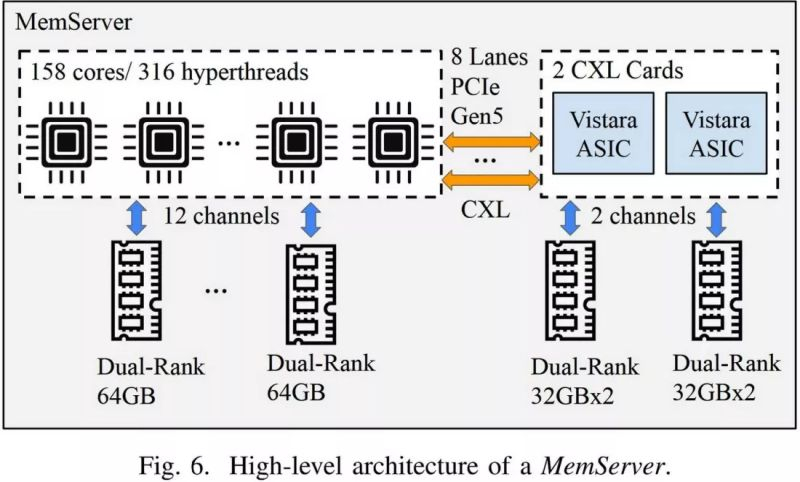
The culmination of this effort is a new class of servers dubbed "MemServer." Each machine implements a tiered memory hierarchy. With a total capacity of 1 TB, the RAM is split into two functional layers: a primary 768 GB array (DDR5-6400) connected directly to the CPUs for maximum throughput, and an additional 256 GB (DDR4-2400) accessed indirectly via the Vistara controller over the CXL interface.
From a software perspective, this configuration is interpreted as a Non-Uniform Memory Access (NUMA) node. The operating system treats the DDR4 segment as a distinct memory region lacking a direct processor link. This enables granular data management: high-priority "hot" data resides in the ultra-fast DDR5, while less frequently accessed "cold" data is migrated to the slower DDR4.
To ensure system stability, Meta modified the standard CXL driver for the Linux kernel. These changes are expected to hit the main repository soon, potentially catalyzing similar implementations across the industry. The technical specifications of the Vistara chip are equally noteworthy: based on the open RISC-V architecture, it supports two independent 72-bit DDR4-3200 channels. Each MemServer utilizes two such controllers.
Meta's approach is not an isolated case. South Korea's Panmnesia is pursuing similar CXL-based solutions to unify disparate memory generations within a single server fabric. Furthermore, Panmnesia is already looking toward the horizon, developing controllers with support for PCIe 7.0 and CXL 4.0.
Such initiatives signal a shift toward "composable infrastructure," where hardware resources are no longer rigidly tethered to a specific motherboard generation. This not only optimizes procurement costs but also significantly reduces electronic waste by ensuring every gigabyte of memory is utilized to its full physical potential.
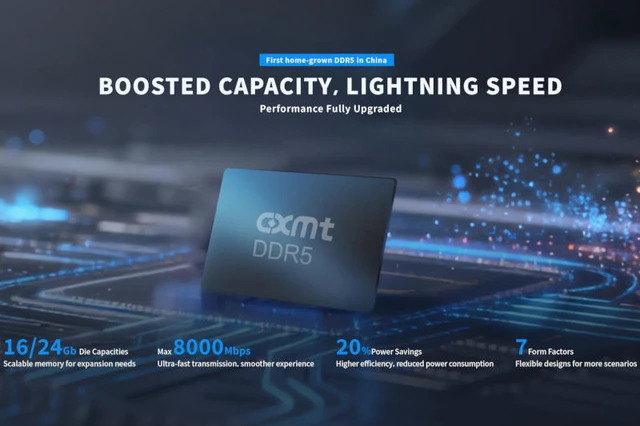 The Price of Acceleration: CXMT’s Rapid Push into Memory