The AI arms race is evolving, shifting from the commoditization of individual components toward a struggle for total infrastructural dominance. As tech titans seek to mitigate vendor lock-in by engineering their own proprietary silicon, Nvidia is countering with a sweeping strategic pivot. Its investment in MediaTek signals a transition toward an open ecosystem model, where the market leader provides the foundational framework for third-party innovation. This alliance is designed to cement Nvidia's hegemony over the very architecture of the modern data center.
The contemporary semiconductor landscape is undergoing a profound transformation. The industry's titans—from Amazon and Google to Microsoft and OpenAI—are aggressively seeking to divest themselves of their technological reliance on Nvidia, investing billions into the development of proprietary, specialized accelerators. This trend presents a systemic risk for Nvidia: as clients pivot toward in-house silicon, the demand for off-the-shelf GPUs could potentially erode. However, Nvidia’s response has been unexpectedly agile. Rather than simply competing, the company has chosen to become the bedrock upon which these external solutions are built.
The $3.5 billion investment in Taiwan-based MediaTek is far more than a mere capital injection; it is a calculated strategic maneuver. Nvidia is effectively opening its proprietary technological blueprints to its partner, enabling MediaTek to engineer specialized AI chips that are seamlessly woven into Nvidia's infrastructure. Consequently, even if a cloud provider or an AI laboratory opts for a custom MediaTek chip, they remain tethered to the Nvidia ecosystem, utilizing its standards and management tools.
For MediaTek, this alliance provides access to the "gold standard" of scalability. A company with immense expertise in power-efficient architectures for smartphones and the Internet of Things (IoT) is now pivoting that experience toward high-performance computing (HPC). The development of Application-Specific Integrated Circuits (ASICs) for data centers is emerging as a primary growth engine; projections suggest this segment could generate up to $2 billion in revenue for the company by 2026.
The technical linchpin of this partnership is NVLink. In the realm of big data, the raw compute power of an individual die is secondary to the speed of interconnectivity between them. NVLink serves as the high-speed interconnect that allows chips from different manufacturers to exchange data with minimal latency. By granting access to this protocol, Nvidia is transforming its ecosystem into a universal framework where third-party developments complement, rather than replace, its own product line.
This expansion extends far beyond the confines of server racks. The concept of "Physical AI" envisions the migration of intelligent computation directly into objects within the tangible world. In this context, MediaTek’s proficiency in automotive electronics and wireless connectivity becomes invaluable. Collaborative efforts on software-defined vehicle platforms, the integration of RTX graphical capabilities with the computational power of Nvidia Drive AGX, and the creation of specialized developer stations like DGX Spark, create a closed-loop ecosystem: from model training in the cloud to execution within a vehicle or a personal computer.
A similar strategy is evident in Nvidia's other alliances, such as its partnership with Amazon Web Services. While that arrangement did not involve direct investment, the integration of millions of GPUs and the implementation of NVLink Fusion pursue the same objective—the creation of a unified technological space. Nvidia is evolving beyond the role of a mere hardware vendor; it is becoming the architect of the global compute fabric, where even competitors must adhere to its protocols to ensure the scalability of their systems.
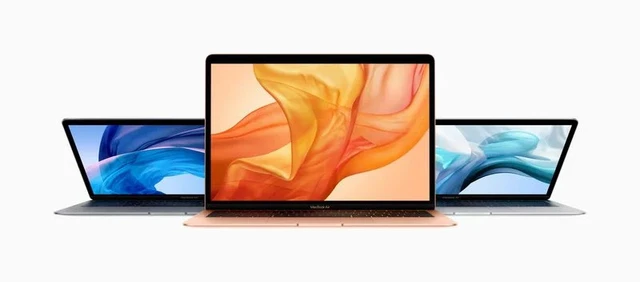 The Twilight of the Early Retina MacBook Era