Valve's ambition to transplant the raw power of the PC into the living room via a console format collided with the perennial pitfalls of overly ambitious hardware. Early adopters of the Steam Machine began reporting critical system failures, signaled by a telltale pattern of LED indicators. The incident reignites the debate surrounding the reliability of bespoke, integrated hardware solutions. Ultimately, the story of this flawed launch has evolved into a sobering reminder of the industry's most notorious hardware catastrophes.
The Steam Machine was conceived as a revolution in home gaming, aiming to marry the flexibility of an open platform with the seamless convenience of a console. However, for one of the early adopters of a 512GB model, the experience proved disastrous: the device failed almost immediately after setup, leaving the user staring at a black screen.
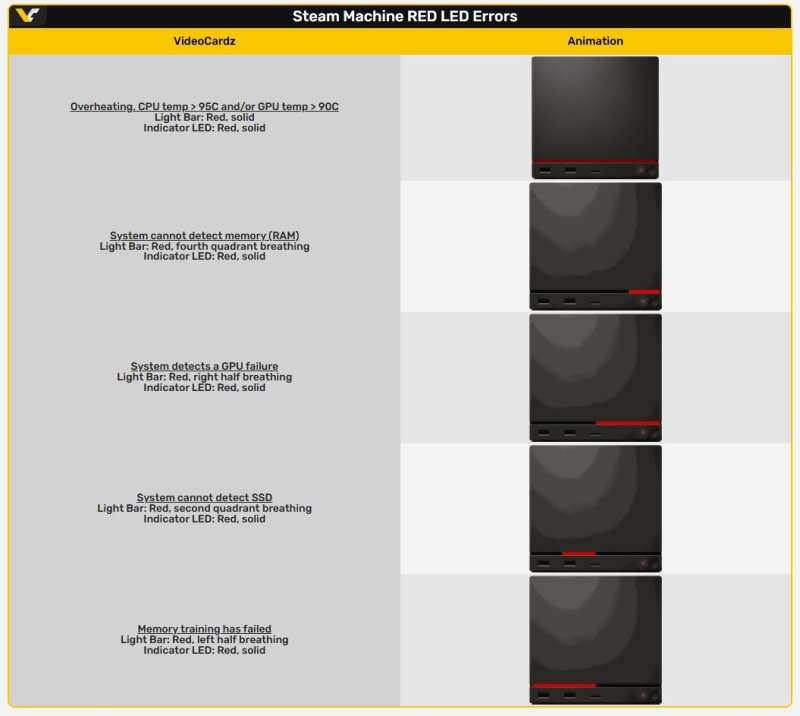
Eschewing traditional text-based error logs, Valve implemented a visual diagnostic system. An RGB light strip integrated into the bottom of the front panel serves as a sort of "Morse code" for technicians during a system failure. Each red lighting pattern corresponds to a specific hardware malfunction, transforming a purely aesthetic design element into a harbinger of catastrophe.
The most ominous signal is a solid red glow across the entire strip—a definitive indicator of critical overheating. This mode triggers when the CPU exceeds 95°C or the GPU climbs above 90°C. Other variations, such as a "breathing" effect (a slow pulse of fading and brightening), signal component detection failures. A pulse centered in the middle indicates a missing SSD; a shift to the right suggests a RAM failure, while a left-side pulse signals a failed memory test.
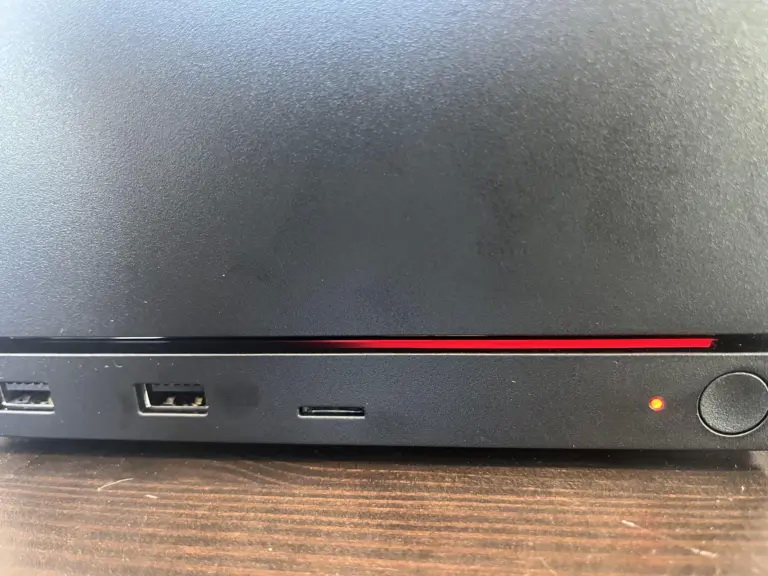
For the user in question, the situation was even more dire. They observed a specific combination: a flashing red strip on the right side of the panel coupled with a solid red LED by the power button. According to Valve's technical documentation, this specific sequence is an unequivocal sign of GPU failure.
The architectural specifics of the Steam Machine render such a failure fatal for the end user. Unlike a traditional PC, where the graphics card is a modular, replaceable component, the Steam Machine utilizes a custom GPU integrated directly into the motherboard. This design precludes any possibility of user-led repair or upgrades; a GPU failure effectively equates to the death of the entire machine.
The owner's sole recourse in this scenario is to contact after-sales support for a return or replacement. The incident resonated deeply within the gaming community, as the visual manifestation of the error—the ominous red glow—triggered visceral flashbacks.
The industry was reminded of the infamous "Red Ring of Death" that plagued the Xbox 360, where a similar light signal around the power button served as a death sentence for the console. Despite the differing technical origins, the psychological impact remains identical: a red light on a gaming device is an immutable symbol of hardware collapse.
 The Price of Acceleration: CXMT’s Rapid Push into Memory