The race for fully autonomous driving has long since shifted from the realm of pure software to the domain of specialized hardware. Waymo has finally pulled back the curtain on its onboard computing architecture, unveiling a system where reliability and response times are treated as absolute imperatives. The transition to proprietary silicon marks a new milestone in the evolution of how machines perceive and interpret the urban environment. It is no longer simply a matter of data processing, but of forging a sophisticated digital consciousness capable of commanding a multi-ton vehicle in real-time.
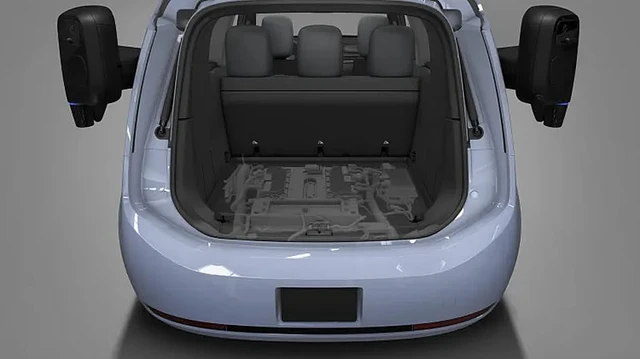
The cognitive engine of the Waymo autonomous vehicle is housed within the trunk, where the car's entire processing power is concentrated. This computational complex operates as a single organism, synthesizing real-time data streams from cameras, lidars, and radars, transforming raw telemetry into precise driving commands. In designing this system, engineers were guided by three fundamental imperatives: ultra-low latency, absolute environmental resilience, and comprehensive redundancy.
From an engineering standpoint, the hardware must operate flawlessly under constant vibration and extreme temperature fluctuations while remaining virtually silent. Redundancy is a critical pillar of the architecture; the presence of two parallel systems ensures that even if a single node fails, the vehicle maintains control and can safely complete its maneuver.
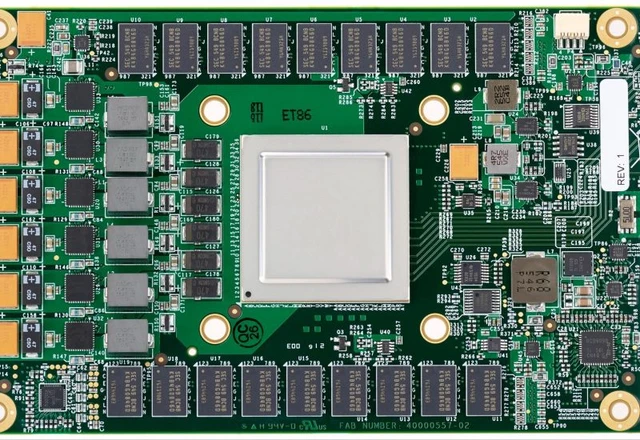
At the center of this ecosystem lies a custom ASIC, fabricated using a 5-nanometer process node. With a performance ceiling of 1,000 TOPS (trillions of operations per second), the chip handles initial data processing and executes machine learning algorithms before the information even reaches the general computing modules. This specialization radically reduces response times—a factor that can be decisive for safety in the chaos of urban traffic.
However, Waymo does not rely on a single chip. To handle service orchestration, data flow management, and general coordination, the company employs a hybrid architecture: proprietary developments integrated with traditional CPUs, GPUs, and specialized accelerators. This combination allows the system to simultaneously process feeds from 13 high-resolution cameras, ensuring precise object recognition even in extreme low-light conditions where standard sensors often falter.
Waymo’s hardware strategy is rooted in pragmatism. Rather than attempting to build every component from scratch, the company has focused on the intellectual heavy lifting—data synthesis and ML algorithms—while outsourcing component manufacturing to industry leaders. Its supply chain leverages giants such as TSMC, Nvidia, Samsung, Micron, SanDisk, and Socionext. This synergy has enabled the fleet to scale to 4,000 vehicles across ten cities, facilitating approximately 500,000 commercial trips per week.
The economic trajectory of the system is particularly telling. While the cost of the fifth-generation onboard computer ranged between $100,000 and $125,000, the sixth generation has seen this figure plummet to $20,000–$25,000. Such a dramatic reduction signals a significant optimization of fabrication processes and a shift toward more efficient design methodologies. Nevertheless, even with a fivefold cost reduction, the high price of the robotaxi's "brain" remains the primary bottleneck to mass expansion, turning computational cost into the central lever of competitive advantage in the autonomous transport market.
 Anthropic’s Strategic Push for Hardware Independence