For decades, the dream of supersonic travel has been held hostage by a single physical phenomenon: the devastating sonic boom. For over half a century, stringent regulations have kept high-speed aircraft far from populated areas, relegating them to the niche of transoceanic routes. Now, U.S. aviation authorities are poised to rewrite the rulebook, shifting from an outright ban to a framework of quantitative acoustic impact regulation. This pivot could herald a new era in civil aviation—one where speed is no longer synonymous with urban disruption.
The trajectory of civil supersonic aviation in the United States effectively ground to a halt in 1973. That year marked the imposition of a stringent ban on supersonic flight over land, triggered by the intolerable noise pollution generated by sonic booms. Since then, the skies above American cities have remained a "silent zone," accessible only to military aircraft under exceptional circumstances. However, the current political and technological landscape is forcing a reconsideration of these long-standing dogmas. At the impetus of the Donald Trump administration, codified by an executive order dated June 6, 2025, the Federal Aviation Administration (FAA) has begun drafting a new regulatory framework.
The essence of these proposed changes represents a fundamental paradigm shift. While previous legislation relied on a binary speed restriction, the new regulatory approach moves toward a quantitative assessment of sound pressure. According to the FAA's draft, supersonic flight over domestic territory will become legal provided that the ground-level overpressure does not exceed a threshold of 0.11 pounds per square foot (approximately 5.3 Pa). In effect, the regulator is pivoting from prohibiting the action itself to managing its environmental impact.
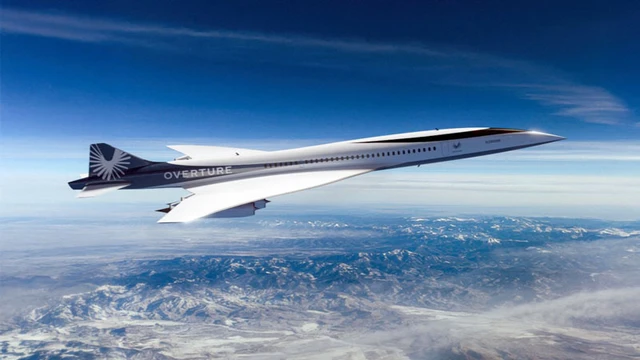
These calculations are rooted in flight test data from Boom Supersonic’s XB-1 prototype. Having broken the sound barrier eighteen months ago, the developers provided the industry with the critical metrics necessary for this analysis. Nevertheless, the path to commercialization has proven treacherous. Recently, Boom Supersonic has pivoted toward a more pragmatic market, repurposing its aviation turbines as power generators for data centers. This strategic maneuver underscores the formidable financial and engineering risks inherent in developing a next-generation commercial supersonic airliner.
Parallel to the FAA's initiatives, NASA is advancing its own strategy through the Quesst program. Agency engineers have opted for a radical redesign of aircraft geometry. The X-59 is engineered to prevent shockwaves from coalescing into a single, powerful boom, instead reflecting them upward to minimize the impact on the ground. On June 12, 2026, the X-59 successfully reached its design cruise, hitting Mach 1.4 at an altitude of over 16,000 meters. This milestone clears the way for the most challenging phase: flight tests conducted directly over residential areas.
However, NASA has expressed skepticism regarding the FAA's methodology. Agency scientists argue that simply measuring overpressure fails to capture the full complexity of how noise is perceived by the human ear. Instead, they propose using Perceived Loudness in decibels (PLdB). To validate this hypothesis, NASA plans to conduct a series of flights over small towns to gather subjective feedback from residents. Ultimately, the human factor—rather than raw pressure data—may become the deciding argument in the final approval of the regulations.
Consequently, aviation stands on the threshold of returning to speeds that once seemed like an inevitable future. Although mass-produced supersonic liners compliant with these new standards do not yet exist, the establishment of a legislative framework is the first and most critical step. The industry is moving from theoretical debate to empirical testing, attempting to strike a delicate balance between humanity's drive for speed and the fundamental right to silence in one's own home.
 The Price of Acceleration: CXMT’s Rapid Push into Memory