The boundary between consumer electronics and aviation technology is increasingly blurring, an evolution that inevitably triggers a collision with stringent regulatory frameworks. The case of the HoverAir Versa serves as a cautionary tale, illustrating the inherent risks of attempting to circumvent legal restrictions through clever marketing maneuvers. When a device attempts to straddle the line between a camera and a drone, it inevitably finds itself caught in the crosshairs of regulatory authorities. In this instance, the FCC has effectively shut the door on Zero Zero Robotics' ambitions to launch the product in the U.S. market.
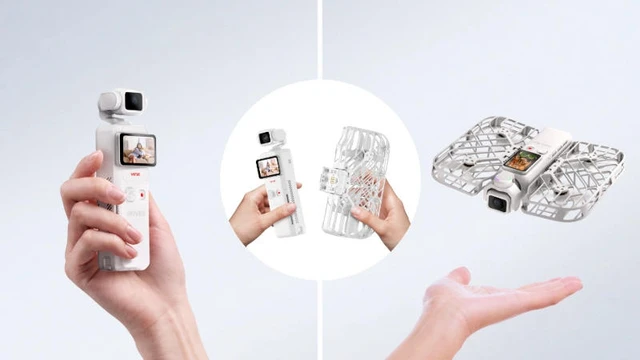
The launch of the HoverAir Versa on Indiegogo has evolved into a cautionary tale regarding the complexities of navigating government regulations. The product was envisioned as a hybrid: a compact camera with an integrated stabilizer that transforms into a fully functional drone via a detachable propeller module. However, just three days into the campaign, order intake was effectively frozen.
The conflict centered on the requirements of the U.S. Federal Communications Commission (FCC). The manufacturer, China-based Zero Zero Robotics, attempted a strategic workaround by splitting the device into two distinct products. The rationale was straightforward: position the primary unit as a camera—thereby bypassing the stringent restrictions imposed on drones—and present the "Flight Kit" (the propeller module) as an optional accessory.
The regulator, however, remained unyielding. In an attempt to convince the FCC that the camera should not be restricted—arguing that the manufacturer was not listed among supervised companies in the "camera" category—Zero Zero Robotics collided with a fundamental principle of classification. According to FCC internal regulations, any camera intended for use within a UAV is automatically classified as a critical drone component. Consequently, the attempt to decouple the "camera" from the "flight module" proved legally moot.
The fallout was immediate. The HoverAir Versa vanished from the FCC database, effectively signaling a revocation of previous authorizations. The company now finds itself in a predicament where it cannot legally advertise or sell either the Flight Kit or the camera itself within the U.S., as any device emitting radio frequencies requires commission approval.
Currently, the situation is a stalemate. U.S.-based users on Indiegogo can no longer see the option to order the Flight Kit. Access to this section is only possible via VPN by switching regions to Canada; however, any attempt to arrange shipping to the United States is blocked by the platform. This attempt to circumvent the system through formal rebranding has resulted in a total halt to the company's expansion into one of the most lucrative consumer electronics markets.
 The Price of Acceleration: CXMT’s Rapid Push into Memory