The contemporary electronics market is grappling with an unprecedented shift in the power dynamics between brands and component suppliers. Valve's launch of the Steam Machine served as a stark bellwether for this crisis, exposing the industry's precarious reliance on a handful of technological behemoths. Today, the cost of the end product is dictated not by market competition, but by the uncompromising terms imposed by memory manufacturers. This shift signals the end of the era of flexible contracting and the dawn of a period characterized by absolute price dictation.
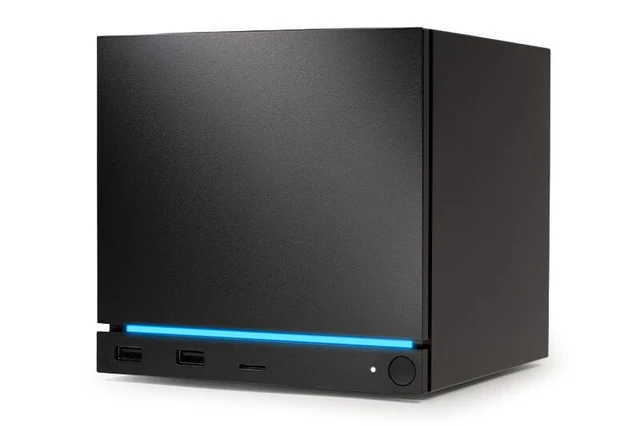
The pricing for the new Steam Machine gaming PC has landed significantly above market expectations: the 512GB model is priced at $1,049, while the 2TB variant reaches $1,349. Adding to the sting, the controller is not included, further inflating the final bill. This aggressive pricing strategy is a direct consequence of the global memory shortage, which has forced Valve to completely overhaul its financial roadmap and abandon the practice of subsidizing hardware production.
At the heart of the issue lies a stark oligopoly. The RAM market is currently dominated by three titans: Samsung, Micron, and SK hynix. Amidst the acute shortage, these players have fundamentally shifted their business models. The era of traditional long-term contracts with fixed pricing has vanished. Instead, dealings with suppliers now resemble an ultimatum: memory manufacturers set monthly prices and available batch volumes, leaving buyers with a binary choice—accept the terms or lose access to supply entirely.
This crisis extends far beyond niche gaming hardware. The scale of the disruption is so vast that even giants like Apple have been forced to issue public warnings regarding imminent price hikes. The current component landscape has created a scenario where even the world's largest corporations have lost their leverage over raw material costs.
A technical compromise became the only viable way to curb rising costs. Depending on warehouse availability at the time of assembly, the Steam Machine may be equipped with either a single 16GB memory module or two 8GB modules. Performance analysis indicates that in real-world gaming scenarios, the difference between these configurations is negligible and has no measurable impact on the user experience.
By analyzing the pricing trajectory of the Steam Deck OLED—where the 512GB and 1TB versions saw increases of $240 and $300, respectively—one can extrapolate Valve's original intentions. It is likely that the target price for the Steam Machine was intended to be approximately $809 for the base model and $1,049 for the high-capacity version. However, the harsh realities of the semiconductor market have rendered these figures an unattainable ideal, forcing the company to pass the costs on to the end consumer.
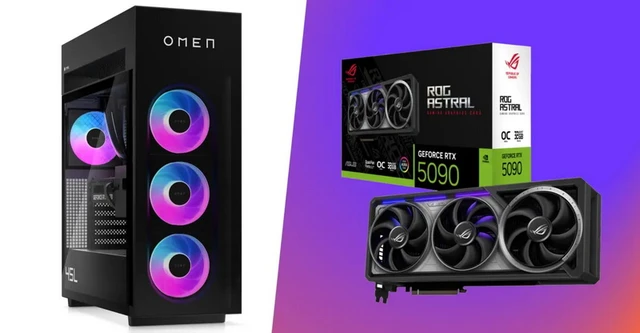 The Economic Paradox of the GeForce RTX 5090