The era of humanoid robot lab demonstrations is rapidly drawing to a close. The industry is pivoting from the development of functional prototypes toward the deployment of systems capable of sustained operation within unpredictable, real-world environments. RealMan Robotics aims to accelerate this transition by integrating thousands of its units directly into active production and service pipelines. This strategic shift transforms robotics from a series of high-profile spectacles into a scalable and efficient engine of productivity.
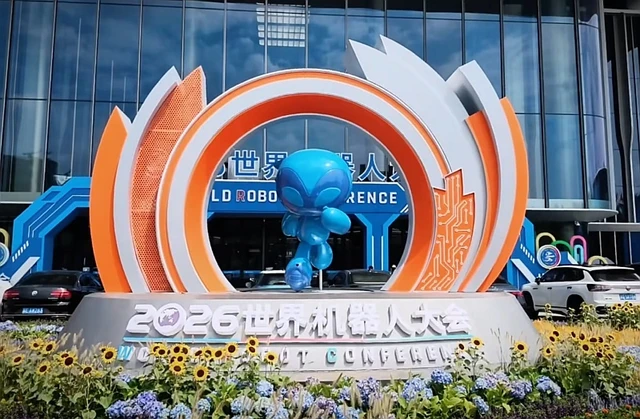
The World Robot Conference (WRC) 2026 in Beijing underscored a pivotal shift in the industry's trajectory: a move away from theoretical concepts toward pragmatic, applied utility. RealMan Robotics presented its robots not as mere technological prototypes, but as fully integrated participants in professional workflows. The spectrum of tasks now being delegated to these machines is impressively diverse, ranging from precision pharmaceutical processing in pharmacies and the inspection of electrical panels to full-scale culinary preparation and the remote configuration of industrial equipment.
The company's strategy transcends conventional marketing. The plan to deploy approximately one thousand RealBOT units by 2026 is driven by the imperative to harvest datasets from real-world environments rather than simulated ones. Only through continuous interaction with the physical world can robots develop the adaptability required to operate in environments where variables shift by the second.
Underpinning this expansion is the Global Link Network (GLN) control system. This global communication framework enables human operators to command robots remotely with millisecond latency, regardless of the thousands of kilometers separating them. In essence, GLN establishes a new model of distributed labor, where the specialized skills of a human expert are projected through a robotic body to any point on the globe.
Yet, the true value of teleoperation lies not in the remote access itself, but in the generation of high-fidelity data. Every teleoperation session is transformed into a critical dataset encompassing environmental perception, object manipulation, and decision-making logic. This empirical experience serves as the fuel for neural network training, allowing machines to gradually transition from direct human control to the autonomous execution of complex tasks.
For commercial viability, fault tolerance is paramount. In this regard, the CR L3 certification from the Shanghai Robotics Research Institute serves as a benchmark of product maturity. A Mean Time Between Failures (MTBF) of 50,000 hours elevates these lightweight humanoid systems from the category of expensive novelties to that of reliable industrial equipment capable of prolonged operation without downtime.
Simultaneously, significant strides are being made in sensory perception. A partnership with PaXini in tactile sensing allows robots to "feel" surfaces and pressure. In an industrial context, this translates to a sharp reduction in collisions, enhanced assembly quality, and, most importantly, guaranteed safety during direct human-machine interaction.
Ultimately, the RealMan Robotics initiative reflects a broader global trend: victory will not be claimed by whoever builds the "smartest" robot in a sterile laboratory, but by those who can synthesize robust hardware, advanced sensing, and massive real-world datasets. The fusion of teleoperation and machine learning is transforming humanoid robots into universal tools capable of delivering tangible economic value here and now.
 Anthropic’s Strategic Push for Hardware Independence