The era of Large Language Models is transcending the confines of text fields and screen-based interfaces, striving toward physical embodiment. OpenAI is making a bold foray into hardware with the development of a portable AI companion designed to fundamentally reimagine the paradigm of human-machine interaction. This is far more than another iterative leap in smart speakers; it is an ambitious attempt to forge a comprehensive digital companion characterized by profound personalization. At the heart of this strategy lies a pivotal transition: moving beyond the reactive assistant toward a truly proactive intelligent agent.
The artificial intelligence industry is undergoing a pivotal shift: moving beyond cloud-based services toward physical objects integrated into the fabric of daily life. OpenAI’s latest hardware venture—a screenless portable speaker—is designed to be the tangible manifestation of ChatGPT. The device blends smart home orchestration and a multimedia hub with a personal assistant capable of processing complex queries and interacting with the physical world in real time.
The technological backbone of the device is GPT-Live, an advanced iteration of the voice mode that radically alters the dynamics of human-AI interaction. Moving away from traditional "prompt-and-response" systems, this model supports full-duplex communication; it can listen and speak simultaneously, organically adapting to the pace and emotional cadence of a conversation. To ensure contextual awareness, the device is equipped with a camera and a suite of sensors, allowing the AI to perceive its surroundings and understand the immediate environment of its user.
Developers have placed significant emphasis on the psychological dimension of the interaction. The goal is to evolve the gadget from a mere tool into a genuine companion with a distinct "personality." To achieve this, the device incorporates kinetic mechanical elements that create the illusion of a living entity, reacting to the user not just vocally, but physically. Hyper-personalization is driven by the analysis of personal data, including email correspondence, enabling the AI to anticipate the owner's needs and act as an expert intimately familiar with the context of their life.
Bringing such a sophisticated product to fruition required the involvement of the elite tier of industrial design. A central role is played by LoveFrom, led by Jony Ive, whose influence on the aesthetics and ergonomics of Apple products has become legendary. The synergy between OpenAI and its $6.5 billion acquisition of the startup io has allowed the company to assemble a team comprising hundreds of former Apple engineers and designers, including experts such as Tang Tang, Evans Hankey, and Paul Mead. This strategic influx of talent is intended to ensure a level of execution that rivals the finest examples of consumer electronics from recent decades.
However, this rapid hardware progression has sparked a serious legal conflict. Apple has initiated litigation, accusing OpenAI of misappropriating trade secrets. The primary allegations center on Tang Tang, who is accused of orchestrating a campaign to gather confidential information regarding Apple's development methodologies and future product roadmaps. Despite the pressure, analysts believe that the conceptual divergence between the Apple ecosystem and OpenAI’s new device may allow the company to avoid catastrophic legal consequences.
In the long term, this portable speaker is merely the first phase of a broader expansion. OpenAI’s strategy envisions a gradual departure from traditional form factors in favor of devices capable of entirely replacing the smartphone. The company's roadmap includes the development of wearables and an entry into home robotics, where artificial intelligence will finally gain a full physical body to interact with the material world.
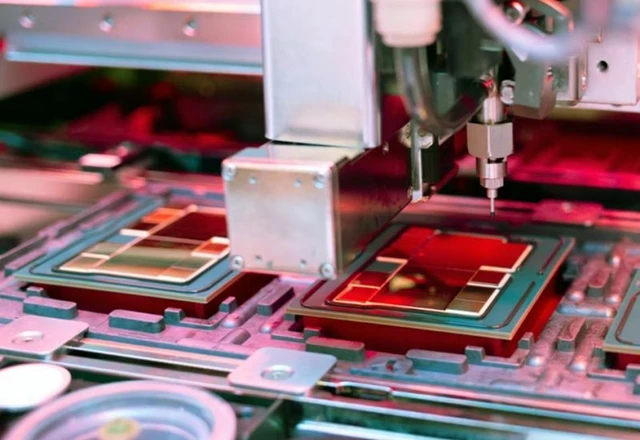 Intel’s Strategic Play for Advanced Packaging Supremacy