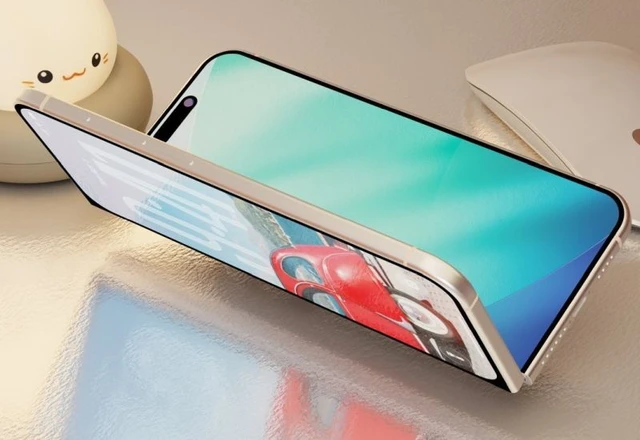
The foldable device industry has long served as a sandbox for experimentation, dominated by a handful of daring pioneers. However, Apple’s entry into this segment is poised to fundamentally shift consumer perception, evolving foldable displays from a mere technological curiosity into the gold standard for the premium market. The introduction of the iPhone Ultra signals a paradigm shift in productivity, effectively erasing the boundary between the smartphone and the tablet. This strategic move will be pivotal for the company's entire ecosystem, reshaping market demand and establishing a new benchmark for quality.
Within the high-tech landscape, a distinct pattern has emerged: when Apple enters a category already occupied by its competitors, it does so not merely to mark its territory, but to fundamentally redefine the user experience. Early indications regarding the upcoming foldable iPhone Ultra confirm this approach. The focus has shifted away from sterile technical specifications toward tactile sensation and ergonomics, underscoring the company's ambition to create a product that feels intuitive, despite a radical shift in form factor.
One of the primary hurdles for foldable devices has always been their inherent bulk. However, according to initial feedback from pre-production prototypes, the iPhone Ultra strikes a sophisticated balance between volume and portability. Despite a noticeable thickness when folded, the device remains pocketable, ensuring that daily carry does not become a cumbersome experience. Particular attention has been paid to the mechanics: the hinge—the traditional Achilles' heel of flexible smartphones—demonstrates a high degree of reliability, instilling confidence in the structural integrity of the device over thousands of folding cycles.
The centerpiece of the device's visual and functional identity is its flexible display. When unfolded, the device effectively transforms into a compact iPad, offering an interface optimized for managing large volumes of information. This is not merely an increase in screen real estate, but a qualitative shift in how the user interacts with content. Furthermore, the external panel—or a portion of the main screen—effectively serves as a viewfinder during capture, solving one of the long-standing ergonomic challenges of mobile photography.
Nevertheless, the path to innovation is always paved with compromise. In the pursuit of compactness and structural reliability, engineers have had to make certain technical concessions. Specifically, the device lacks a dedicated telephoto lens, a omission that may raise eyebrows among professional mobile photographers. An even more striking decision is the pivot from Face ID in favor of a classic Touch ID fingerprint sensor. It appears that the structural constraints of the foldable chassis precluded the integration of a complex facial recognition array without compromising the aesthetics or the integrity of the display.
From a market strategy perspective, the iPhone Ultra functions as a "halo product." Its premium pricing, which could reach the $2,000 mark, renders it accessible only to a narrow circle of enthusiasts and high-net-worth users. Yet, it is precisely this status that creates a powerful brand effect. Apple is not simply selling an expensive gadget; it is legitimizing the foldable segment for the mass market.
Paradoxically, the launch of the Ultra version may actually stimulate sales of classic iPhone models. Against the backdrop of an ultra-premium, technologically complex foldable, standard smartphones begin to appear as a more pragmatic and accessible purchase, while remaining part of a prestigious ecosystem. In this way, Apple masterfully leverages consumer psychology, using innovation to solidify its dominance across all price tiers.
 The Evolution of the Apple Home Ecosystem