In an era of absolute smartphone dependency and the perpetual hunt for a power outlet, the market is witnessing an unexpected return to basics. Today's users are increasingly seeking either a catalyst for a "digital detox" or a fail-safe communication backup. The new Nokia 300 Charge reimagines the feature phone, transforming it into a genuine power hub. Its defining advantage is an unprecedented energy reserve that fundamentally alters the traditional cycle of interaction with technology.
The mobile industry has long been locked in a relentless arms race of megapixels and processor clock speeds, but HMD has chosen to pivot toward a more fundamental necessity: autonomy. The Nokia 300 Charge enters the market with a 3,700 mAh battery—a bold statement compared to its peers. For context, standard entries in this segment, such as the Nokia 110 Power or Nokia 105, typically top out between 1,000 and 1,750 mAh. Consequently, the new device offers more than double the energy reserves of typical handsets in its class.
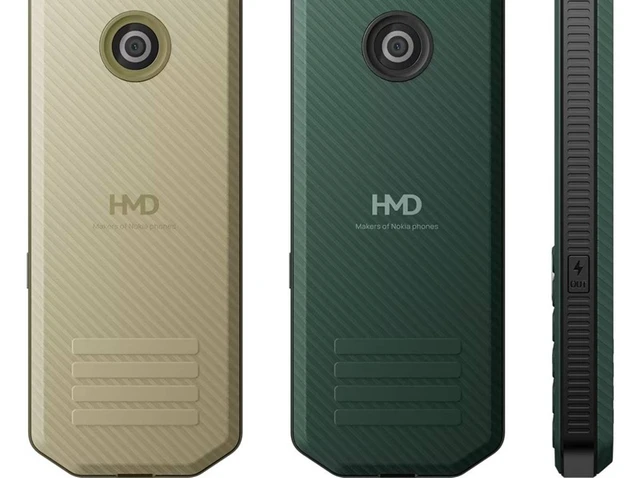
This approach yields performance metrics that seem almost unthinkable by modern standards: the phone can operate for over 40 days on standby and provide up to 37 hours of continuous talk time. This engineering feat is complemented by the modern USB-C standard with 10W charging support. However, the most intriguing detail is the reverse charging feature. Equipped with a dedicated "Out" button on the chassis, the Nokia 300 Charge can function as a compact external power bank, transferring energy to other devices.
The internal hardware is strictly aligned with the device's purpose. At its core is the energy-efficient Unisoc SC6531E processor, paired with a minimal 4 MB of both RAM and internal storage. Despite these unassuming figures, they are sufficient for the S30+ operating system, which is highly optimized for basic tasks. For those requiring media or document storage, a microSD card slot supporting up to 32 GB is provided.
The aesthetics and functionality remain conservative. The device features a 2.4-inch LCD with a resolution of 320 × 240 pixels—perfectly adequate for reading text messages and navigating menus. A camera of similar resolution and a built-in flashlight cover the user's basic needs, while the classic 3.5mm headphone jack eliminates the need for dongles.
In terms of ergonomics, the phone maintains traditional proportions: dimensions of 136.6 × 55 × 14.94 mm and a weight of 138 grams make it virtually unobtrusive in a pocket. Regarding connectivity, the device focuses on the basic 2G standard in dual-band mode (900 MHz and 1800 MHz), ensuring reliability even in the most remote coverage areas.
Available in understated Sand and Green colorways, the Nokia 300 Charge is positioned as an affordable communication tool priced at $35. This is not merely an exercise in nostalgia for the era of feature phones, but a pragmatic response to a market demand for a maximally resilient and low-maintenance device.
 The Phenomenon of the Foldable iPhone Ultra