Samsung continues its methodical saturation of the budget segment with iterative updates, blurring the line between genuine progress and stagnation. The newly released Galaxy A18 in the European market highlights a peculiar trend: the device is growing bulkier and more expensive, yet offers fewer resources in its base configuration. The strategic focus has shifted from raw hardware performance toward long-term software support—a move reflecting the industry's global pivot toward "sustainable consumption." Consequently, the consumer is left with a device shrouded in mystery regarding its most critical component: the processor.
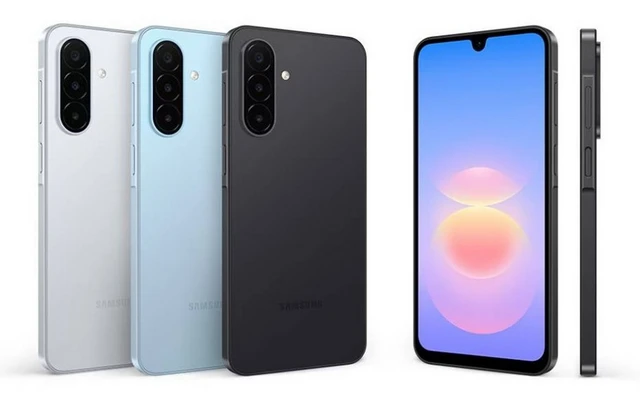
The Galaxy A18’s European debut was remarkably understated, fitting for a device positioned in the mid-range segment. At first glance, the newcomer appears to be little more than a cosmetic refresh of the Galaxy A17 4G; however, a deeper dive reveals several ambiguous shifts. The most intriguing pivot is the transition from the reliable MediaTek Helio G99 to Samsung’s proprietary Exynos 1610. Samsung has opted to keep the technical specifications of this new silicon shrouded in secrecy, raising questions about any actual performance gains. A telling sign of this conservative trajectory is the continued support for 1080p video recording at 30 fps—a specification identical to its predecessor, suggesting that there has been no significant leap in the computational power of the GPU or the Image Signal Processor (ISP).
In terms of aesthetics and ergonomics, the device remains familiar to the series. It features a 6.7-inch Super AMOLED display with a resolution of 2340 × 1080 pixels and a 90Hz refresh rate. While sufficient for a fluid interface, the market has long since shifted toward 120Hz, even within the budget segment. The display retains the traditional punch-hole cutout for the 13-megapixel selfie camera. The primary camera array consists of a 50MP main module with an f/1.8 aperture, a 5MP ultra-wide lens, and a 2MP macro sensor. The absence of optical image stabilization (OIS) makes this a quintessential example of its class, where the emphasis is placed on megapixel counts rather than optical sophistication.
A notable improvement can be found in the chassis's ingress protection. The upgrade from IP54 to IP64 ensures full dust-tightness, enhancing the device's durability in harsh environments. However, the physical dimensions are perplexing: the chassis thickness has increased to 7.7mm (up from 7.5mm on the A17), and the weight has climbed to 196 grams. Given that the screen size and battery capacity remain unchanged, this increase in mass and volume seems unjustified from an engineering standpoint, pointing either to a revised internal layout or the use of heavier housing materials.
Power endurance is handled by a 5,000 mAh battery. Samsung claims a lifespan of 1,200 charging cycles, a critical metric for long-term battery health. Support for 25W fast charging allows the device to reach a 50% charge in approximately 30 minutes, which remains the standard for this lineup.
The Galaxy A18’s primary value proposition lies in its software roadmap. The device ships with Android 17 and One UI 9, but the decisive argument for purchase is the promise of six years of OS updates. With security support extending until the end of October 2032, the smartphone transforms into a long-term asset. This strategy effectively compensates for the modest hardware, ensuring the software remains current for years to come.
The device's economic profile is contentious. The base configuration, featuring 4GB of RAM and 128GB of internal storage, is priced at €280. For comparison, last year's Galaxy A17 4G launched at €200 while offering more memory—6GB of RAM. Consequently, the consumer is faced with a scenario where the device has become more expensive and heavier, with diminished multitasking capabilities, yet gains a longer support cycle and improved dust protection.
In Nordic markets such as Norway and Sweden, higher-tier versions with 256GB of storage are available, expanding data capacity, although microSD card support remains available even in the base model. Ultimately, the Galaxy A18 presents itself not as a technological breakthrough, but as a utilitarian tool where software and physical longevity are prioritized over raw computational power.
 Samsung M16: A New Standard for OLED Panels