The handheld gaming market has long since pivoted from disruptive technological leaps toward a strategy of incremental hardware refinement. Nintendo continues to double down on this approach, planning a series of iterations for its next generation of consoles. The primary objective is striking a delicate balance between the superior visual fidelity of OLED panels and the escalating costs of semiconductor components. This tactical maneuver allows the company to maximize the product's lifecycle, sustaining consumer engagement and market relevance over an extended period.
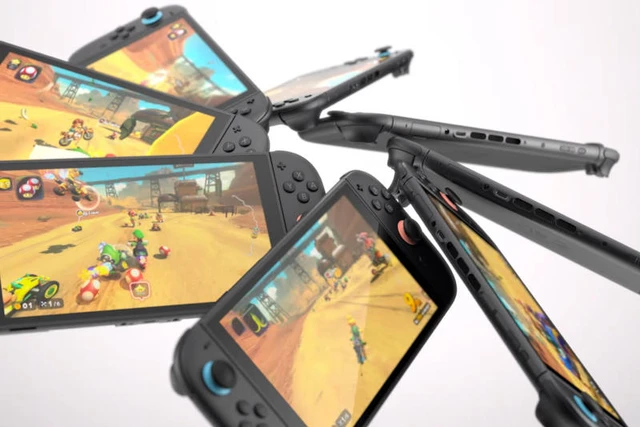
The first milestone in the evolution of the new platform will be the release of an updated Switch 2 as early as this autumn. The centerpiece of this revision is the introduction of a replaceable battery—a move that significantly enhances the device's practicality and extends its operational lifespan. However, this upgrade serves merely as a prelude to more substantial transformations in the console's visual presentation.
Looking further ahead, the Japanese giant plans to launch an OLED variant supporting Full HD resolution (1920 × 1080 pixels). The shift to organic light-emitting diodes will deliver deep blacks and superior contrast—critical factors for any handheld experience. Samsung Display is expected to be the primary supplier of these panels; having already successfully partnered with Nintendo for the first-generation Switch, Samsung is now looking to solidify its position in this new contract.
However, the road to an OLED version is fraught with economic headwinds. The electronics industry is currently grappling with a sharp rise in the cost of memory and key semiconductor components. The price gap between traditional LCD panels and OLED matrices remains substantial, forcing Nintendo to meticulously time the product's launch to avoid passing excessive costs onto the end consumer.
Should development of the updated model commence late this year, mass production may not materialize until late 2027 or early 2028. This timeline is far from accidental; it is dictated by Nintendo’s time-tested strategy of phased hardware iterations.
Reflecting on the first generation reveals a clear pattern: the original LCD Switch debuted in 2017, followed by the compact Lite in 2019, and finally the OLED model in 2021. Notably, all these iterations remained capped at a modest 720p resolution. The Switch 2, debuting in 2025, has already achieved a qualitative leap to Full HD; thus, the anticipated transition to OLED by 2027 will serve as the logical conclusion of this upgrade cycle. In doing so, Nintendo is masterfully balancing its technological ambitions against the harsh realities of the market, where component costs dictate the pace of innovation.
 The Foldable iPhone: A New Chapter for Apple