The mobile device industry is entering an era of deep neural network integration, baked directly into the silicon. Seeking to solidify its dominance in intelligent software, Google continues to evolve its proprietary hardware ecosystem. The emergence of detailed specifications for the Pixel 11 series provides a clear window into the company's strategic trajectory—ranging from aggressive power optimization to the refinement of optical systems. This lineup is poised to set the benchmark for human-AI interaction within the modern smartphone paradigm.
Underpinning the entire Pixel 11 lineup is a strategic pivot to the new Tensor G6 processor. Developed in-house by Google, this silicon prioritizes machine learning optimization and neural network computation over raw processing power—a critical shift designed to fuel the seamless integration of Gemini and other sophisticated AI tools. Data security is handled by an updated Titan M3 module, which creates a hardware-isolated environment for storing biometric data and cryptographic keys.
The base Pixel 11 serves as a balanced proposition for the mainstream user. The smartphone features a 6.3-inch Actua OLED display with a resolution of 2424 × 1080 pixels and an adaptive refresh rate of up to 120Hz. A peak brightness of 3,000 nits ensures flawless legibility even under direct sunlight, while Gorilla Glass Victus 2 provides the necessary structural durability. Under the hood, users can choose between 12GB or 16GB of RAM and storage options up to 512GB. Power is supplied by a 4,985 mAh battery supporting the modern Qi2 wireless charging standard, which utilizes magnets for precise device positioning.
The optical system of the base model remains conservative: a primary 48MP sensor paired with a 13MP ultra-wide module. Despite this, the device maintains a compact footprint, weighing 197g with a thickness of just 8.6mm. Pricing in the US starts at $899, while European markets start at €999.
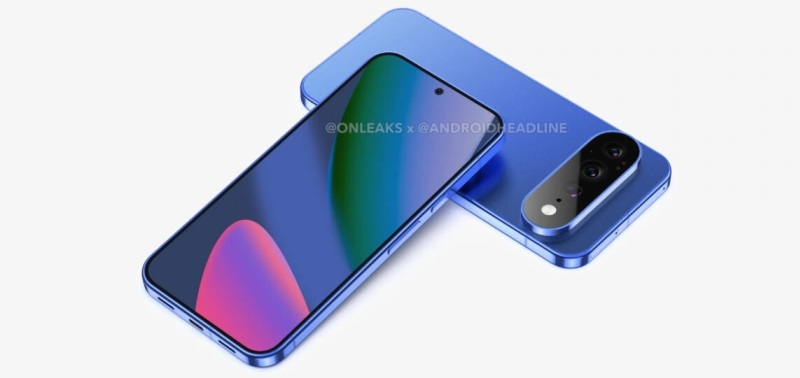
For those demanding advanced imaging capabilities and content creation tools, Google offers the Pro series. While the Pixel 11 Pro shares the same computational foundation as the base model, it represents a quantum leap in mobile photography. It features a triple-camera array: a 50MP main sensor complemented by an ultra-wide module and a 48MP periscope telephoto lens with 5x optical zoom. The "Pro Zoom" technology enables highly detailed shots of distant subjects, effectively turning the smartphone into a professional tool for reportage. The front-facing camera has received a significant upgrade to 42MP, offering a wide 103º field of view.
The Pixel 11 Pro XL expands these capabilities with a 6.8-inch Super Actua OLED LTPO display. The LTPO technology allows the refresh rate to scale dynamically from 1Hz to 120Hz, significantly preserving battery life during static content. This model boasts the most powerful battery in the series at 5,115 mAh and supports 45W accelerated wired charging. For power users handling heavy assets, storage options extend up to 1TB. The Pro XL is priced from $1,299 in the US and €1,199 in Europe.
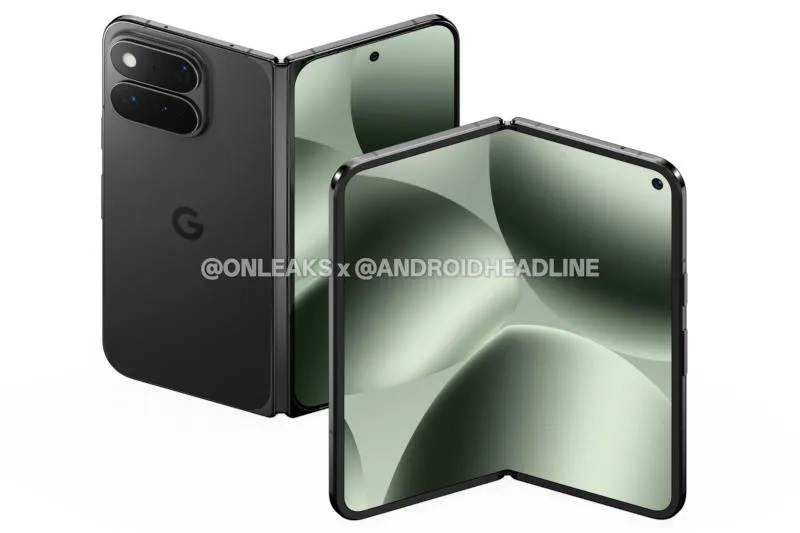
Occupying a unique position in the lineup is the Pixel 11 Pro Fold—Google’s engineering answer to the demand for true multitasking. The device is equipped with two 120Hz OLED panels: a primary 8-inch internal screen and a 6.4-inch external display. Despite its complex architecture, the Fold integrates the full Tensor G6 chipset and supports storage up to 1TB.
The foldable's camera system has been adapted to its form factor, featuring a 48MP main sensor paired with ultra-wide and periscope modules. A notable addition is the inclusion of front-facing cameras on both displays, facilitating biometric face authentication regardless of the device's state. The 4,806 mAh battery allows the device to reach a 50% charge in approximately half an hour. In its folded state, the smartphone measures 10.1mm thick, while unfolding reveals an ultra-slim profile of just 5mm. This flagship starts at $1,899 in the US and €1,999 in Europe.

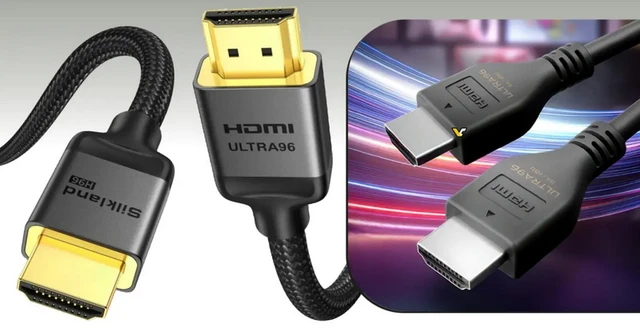 HDMI 2.2: The New Standard for Data Transmission