The mobile technology industry has reached a critical juncture where incremental performance gains now demand a fundamental reimagining of semiconductor architecture. The shift to a 2-nanometer process heralds a new era of power efficiency and computational throughput, effectively evolving smartphones into sophisticated neural computing engines. Xiaomi meets this challenge head-on with the launch of the 18 Pro series, fusing cutting-edge hardware with ambitious optical engineering. These devices serve as a proving ground for pioneering interaction paradigms and state-of-the-art image processing methodologies.
The new lineup is underpinned by a paradigm shift in microelectronics. The integration of Qualcomm's 2nm fabrication process enables clock frequencies of up to 5 GHz—a threshold previously considered unattainable for mobile platforms due to thermal dissipation constraints. The Xiaomi 18 Pro is powered by the Snapdragon 8 Elite Gen 6, while the Pro Max variant steps up to the Extreme Gen 6 modification. The distinction between the two lies less in raw throughput and more in the capabilities of the NPU: the Extreme version is optimized for complex local AI workloads, facilitating deeper LLM integration directly into the operating system.
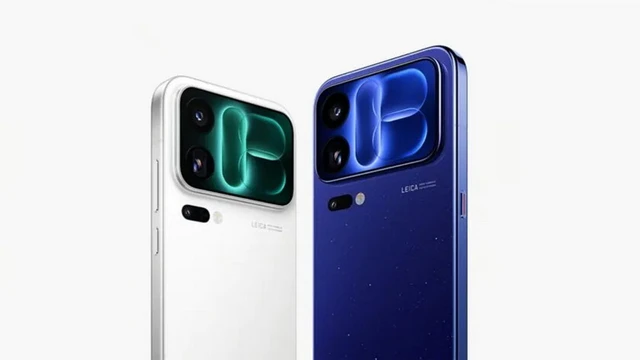
Significant engineering effort has been poured into the optical array, developed in partnership with Leica. The engineers have implemented a triple-camera system centered around the 200MP Light Fusion 960L sensor. The application of LOFIC (Low Full-well Capacity) technology significantly expands the dynamic range, mitigating highlight clipping in bright areas of the frame—a critical requirement for professional-grade mobile photography. A 50MP ultra-wide module with a 102-degree field of view rounds out the setup, but the true technological breakthrough is the periscope telephoto lens.
This module also boasts a 200MP resolution and utilizes a floating lens system divided into two groups. This architecture allows the lens to focus on objects from as close as 12 cm, effectively transforming a powerful zoom lens into a tool for high-fidelity macro imaging. In the Pro Max version, the telephoto aperture has been increased, capturing 83% more light than the previous generation, which substantially enhances portrait quality and low-light performance when shooting from a distance.
The interaction paradigm of the 18 Pro series has been reimagined with the introduction of a secondary OLED display on the rear panel. This 2.86-inch screen with a 120Hz refresh rate is more than just a notification window; it serves as a comprehensive hub for AI-driven app widgets, allowing users to interact with the device without activating the primary display. Adjacent to it is a programmable button with AI-integrated controls, underscoring the brand's strategic pivot toward intelligent assistants.
The primary visual experience is delivered via flat LTPO Super Pixel 2.0 RGB panels. The Pro model features a 6.4-inch matrix, while the Pro Max scales up to 6.9 inches. A peak brightness of 4,000 nits, combined with a PWM dimming frequency of 2,160 Hz, makes these displays some of the most comfortable and legible on the market. The LIPO assembly technology has reduced the bezels to a mere 0.99 mm, creating a seamless "infinite glass" effect. Additional protection is provided by Dragon Crystal Glass 3.0 and a hardware-level image privacy system.
Battery endurance has reached a new echelon: the Xiaomi 18 Pro houses a 7,000 mAh cell, while the Pro Max is equipped with a massive 8,500 mAh battery. Despite these capacities, the devices support 100W fast wired charging and 50W wireless charging. The chassis is certified to the most rigorous IP66, IP68, and IP69 standards, ensuring resilience in extreme environments.
The aesthetic direction is marked by a nod to the brand's heritage: a "Satellite" version featuring a transparent back panel has been introduced, serving as a direct homage to the 2020 Mi 10 Ultra Transparent Edition. This design choice transforms a technological tool into a piece of industrial art, exposing the smartphone's internal architecture.
Pricing begins at 5,999 yuan (approx. $895) for the base Pro model and 6,999 yuan (approx. $1,045) for the Pro Max. Top-tier configurations featuring 16GB of RAM and a 1TB drive—particularly in the transparent finish—reach 10,999 yuan (approx. $1,641).
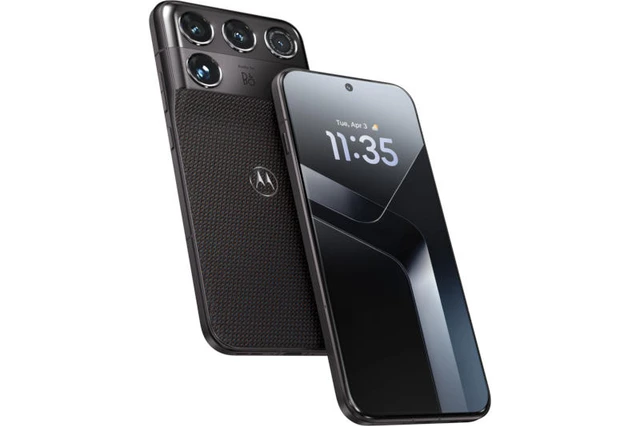
Currently, the devices are available for pre-order in China, with a global release expected later this year. Notably, competition in the "Extreme" silicon segment is set to be fierce; for instance, the Motorola Signature 27 is positioning itself as the first device with such a processor in the US market, setting the stage for a compelling clash between two industry titans vying for leadership in mobile AI.
 Qualcomm’s New Standard for Mobile Performance