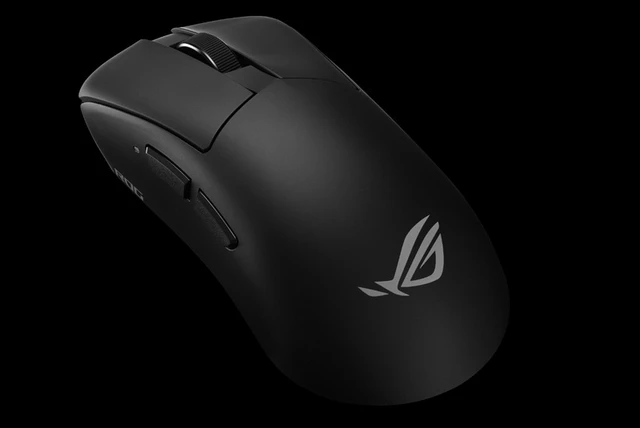
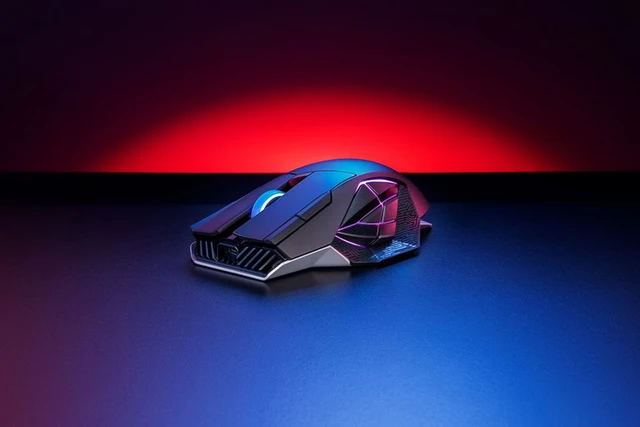
The contemporary gaming peripherals market is pivoting toward a paradigm of extreme precision and granular customization. In the MMO genre—where input density and reaction times dictate the outcome of a skirmish—the demands placed on hardware are becoming increasingly stringent. Asus continues to refine its suite of specialized controllers, aiming to synthesize ergonomic comfort with cutting-edge sensor technology. The new ROG Spatha X 65K represents the logical culmination of an evolutionary arc that began back in 2016.
The trajectory of the Spatha series marks a transition from a classic wired peripheral to a high-tech wireless ecosystem. While the inaugural 2016 model established the ergonomic foundation for MMO gamers and the 2021 iteration introduced wireless freedom, the latest update unveiled at Gamescom 2026 focuses on hardware perfection and modularity.
At the heart of the ROG Spatha X 65K lies an optical sensor boasting a phenomenal resolution of 65,000 DPI. In the current industry landscape, such figures have long surpassed the limits of human visual perception; however, they remain critical for maintaining flawless linear movement and compatibility with ultra-high-resolution displays. Particular emphasis has been placed on Lift-Off Distance (LOD) calibration. This feature allows gamers to precisely define the point at which the sensor ceases to track the surface, effectively eliminating parasitic cursor drift during rapid mouse repositioning.
The technological leap is equally evident in the tactile mechanics. Asus has implemented the ROG Push-Fit Switch Socket III, effectively transforming the mouse into a modular kit. The concept of hot-swappable switches—a staple for mechanical keyboard enthusiasts—has now migrated to pointing devices. Users can now curate their own click profile: installing ROG Micro Switch IIs with a 100-million-click lifespan for maximum tactile response, or opting for ROG Silent Micro Switches when acoustic comfort and stealth are the priorities.
The device's MMO specialization is underscored by twelve programmable buttons. In the high-pressure environment of complex multiplayer games, this control density allows users to map dozens of macros and abilities directly to their fingertips, minimizing reliance on the keyboard. Further customization is provided by a weight adjustment system, mirroring the implementation found in the ROG Gladius Ace IV. This allows users to balance the device's inertia according to personal preference, turning a substantial chassis into a precise, responsive instrument.
The device's ecosystem is meticulously crafted: the magnetic charging station serves as both a power source and a 2.4 GHz wireless receiver, ensuring near-zero signal latency. The transition to ROG Gear Link software is also noteworthy. Moving away from bloated local applications in favor of a browser-based utility reflects a modern industry trend toward reducing system overhead and streamlining synchronization across multiple devices.
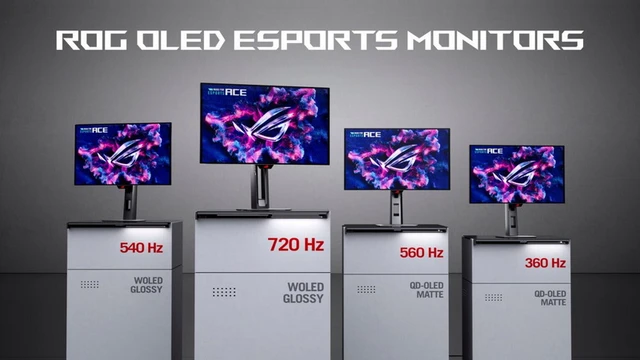 The Speed Limits of Modern Gaming Displays