The contemporary smartphone market is saturated by a relentless arms race of megapixels and clock speeds, yet genuine user demand consistently gravitates toward fundamental reliability and endurance. Chinese manufacturers are responding to this shift by engineering specialized lineups where pragmatism outweighs marketing glitz. realme’s new P-series embodies this philosophy, pivoting the focus from perceived prestige toward extreme autonomy and digital-first accessibility. This is a strategic maneuver that reimagines the device—not as a status symbol, but as an uncompromising tool for work and daily life.
The naming conventions of Chinese tech giants often feel like an intricate puzzle. Within the realme ecosystem, ultra-budget Note devices and accessible C-series handsets coexist alongside balanced mid-range options and flagship GT models. Filling the gaps are the youth-oriented Narzo line and the specialized P-series—the latter blending characteristics of several lineups while maintaining a distinct distribution strategy: selling primarily through online marketplaces to bypass traditional brick-and-mortar retail. The new P4 generation continues this tradition, offering users four distinct models where battery endurance is the primary value proposition.
A standout in the lineup is the Power model, which has effectively carved out its own niche by delivering an unprecedented level of energy efficiency. However, the core of the series consists of the P4, P4x, and P4 Lite. They are united by a singular philosophy: maximizing battery capacity while maintaining an accessible price point.
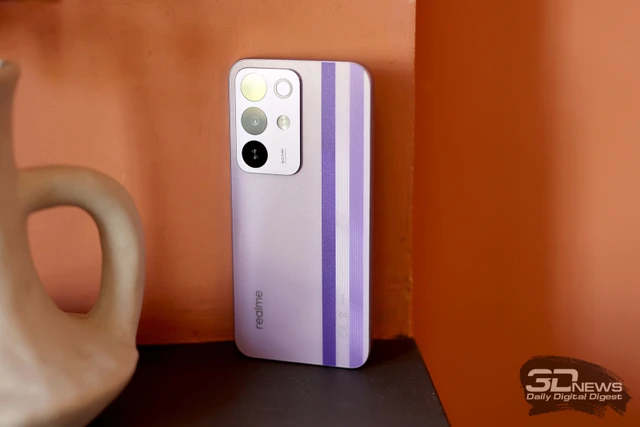
The base realme P4 is essentially a comprehensive redesign of the familiar C85 Pro. Visually, the device has been refreshed with dynamic back-panel textures in shades of lilac, purple, and green, giving the gadget a modern, almost sporty aesthetic. Despite the plastic construction, the chassis is remarkably rugged. IP68/IP69K certifications and the MIL-STD 810H standard ensure that the smartphone can withstand harsh operating conditions, from heavy dust to intense moisture exposure.
The display is a 6.8-inch AMOLED panel with a 120Hz refresh rate and Full HD+ resolution. However, the hardware platform—powered by the Qualcomm Snapdragon 685—is not designed for high-end gaming. This chipset was chosen deliberately; its low power consumption and lack of thermal throttling perfectly complement the massive 7,000 mAh battery. Consequently, users get a device capable of operating reliably for one and a half to two days on a single charge, supported by 45W fast charging.
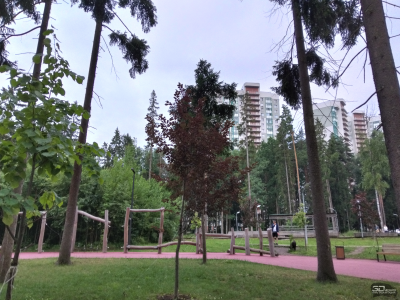
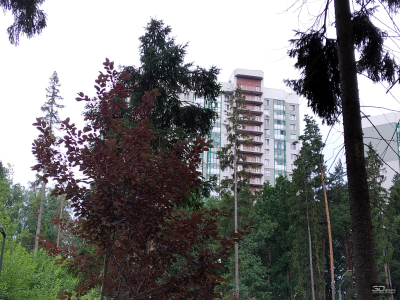

The photographic capabilities of the P4 are modest, centered around a single 50MP main camera with an f/1.8 aperture. The absence of optical image stabilization (OIS) is mitigated by post-processing algorithms and a "hybrid" 2x zoom achieved through sensor cropping. While digital noise is noticeable in low-light conditions, the level of detail remains acceptable for this price segment. The software experience is a pleasant surprise: Android 15 with realme UI 6.0 brings AI-driven features to the budget segment, making interface interactions feel more contemporary and fluid.



If the P4 represents balance, the P4x is the embodiment of "maximum energy." It utilizes a silicon-carbon battery with a capacity of 8,000 mAh. This technology increases energy density without bloating the device's physical dimensions to an excessive degree. In exchange for this record-breaking autonomy, certain compromises were made: the AMOLED panel is replaced by an HD+ LCD, and performance is handled by the Unisoc T7250 platform.

With a modest 4GB of RAM and a simplified screen, the P4x is the ideal tool for those who need a utilitarian workhorse—a device for basic communication and essential tasks that can last several days without a charger. The chassis also adheres to the MIL-STD 810H standard and carries an IP64 rating, ensuring confidence when using the device in rain or dusty environments.


Rounding out the lineup is the P4 Lite—the most affordable entry, which mirrors the concept of the P4x but in a more streamlined execution. It employs a standard 7,000 mAh lithium-polymer battery. The device's dimensions are particularly noteworthy: a chassis thickness of just 8.38 mm is impressive for a smartphone housing such a large cell.

The technical specifications of the Lite version are identical to the P4x (Unisoc T7250, 4GB RAM), and the screen is a 720p LCD panel. The camera is stripped down to the bare essentials with an 8MP module, firmly placing the device in the category of utilitarian tools. Nevertheless, the inclusion of MIL-STD 810H and IP64 protection makes it a reliable companion in environments where a standard smartphone might fail.
Overall, the realme P4 series highlights an interesting trend: the manufacturer is moving away from trying to please everyone with a single device and is instead creating sharply segmented products. Rather than offering a "jack-of-all-trades" mid-range option, the company provides extreme choices in one specific parameter—autonomy—while pushing performance and display quality into the background.
 Stratospheric Platforms for Global Coverage