The semiconductor industry is undergoing a fundamental shift, as artificial intelligence evolves from a mere additive feature into the primary driver of market valuation. The scale of expansion for specialized accelerators is beginning to rival the historical volumes of the entire microelectronics market. Amidst the rapid transition from model training to mass deployment, the very paradigm of server computing is being rewritten. Current forecasts point toward the emergence of a new ecosystem where the boundary between cloud infrastructure and edge devices is effectively disappearing.
The current technological landscape is evolving with unprecedented momentum: the AI accelerator market is projected to reach $1.4 trillion by 2030. This figure is comparable to the aggregate valuation of the entire semiconductor industry in its current state, signaling a colossal reallocation of resources and capital within the sector. The primary catalyst for this growth is the pivotal shift from the development phase of neural networks to their widespread deployment—inference.
The server CPU segment is coming into sharp focus. Previously viewed as auxiliary components for data orchestration, their role is being redefined by the demands of AI model inference. Market capacity in this segment is expected to surge from $25 billion to over $200 billion in just four years. This leap is driven by the explosive proliferation of autonomous agents; where we once spoke of millions of units, the industry is now preparing to support billions of intelligent entities.
This transformation extends beyond remote data centers. There is a clear trend toward the decentralization of compute: as AI integrates into daily life, there is an urgent need for devices capable of processing complex algorithms directly at the edge (Edge AI). Collectively, the market for computing solutions could surpass the $2 trillion threshold by 2030. Such rapid evolution renders traditional market statistics nearly obsolete, as fundamental metrics are now rewritten every few months.
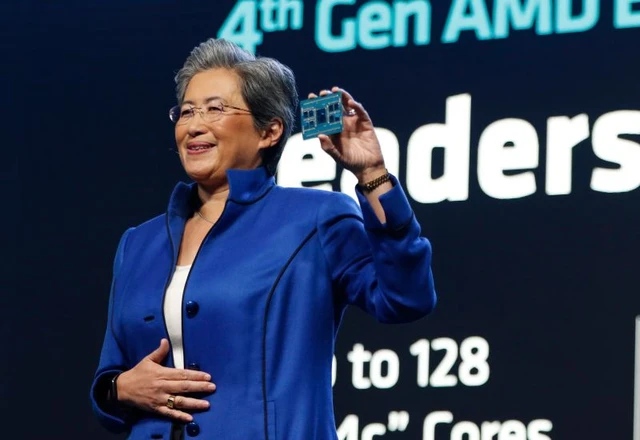
These ambitions are manifesting in a new generation of server solutions, such as the EPYC Venice series processors. These systems are already entering mass production and are becoming the gold standard for major cloud providers. The high demand for these solutions confirms that cloud infrastructure is undergoing a profound modernization to meet the voracious appetite of generative AI.
Ultimately, we are witnessing more than just an increase in chip sales; we are seeing a fundamental restructuring of the global computing hierarchy. Compute capacity is emerging as the primary resource of the digital economy, transforming semiconductors from mere hardware components into strategic assets on a global scale.
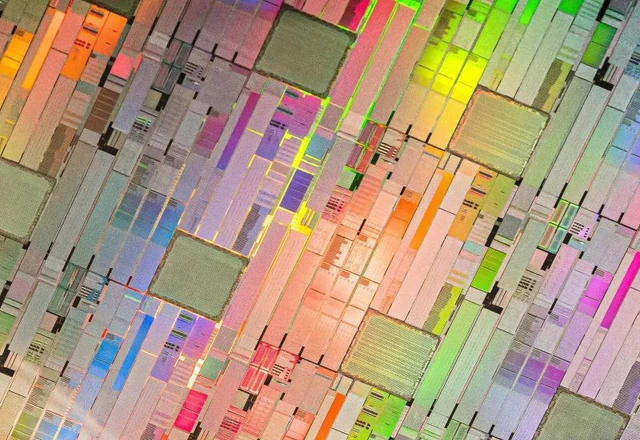 The Triumph of 3nm Chip Manufacturing