The global semiconductor market is currently grappling with a systemic crisis of confidence and a critical shortage of fundamental components. While the artificial intelligence gold rush fuels an insatiable demand for specialized silicon, the cost of conventional memory has surged to levels that are nearly prohibitive for the end consumer. A recent class-action lawsuit alleges that this scarcity is not a byproduct of organic market dynamics, but rather the result of a calculated strategy orchestrated by industry titans. This precedent exposes the precarious tension between genuine technological advancement and the corporate drive for windfall profits within the DRAM sector.
The current state of the RAM manufacturing landscape is a textbook case of an oligopoly: Samsung, SK Hynix, and Micron control nearly 90% of the global DRAM market. Such a concentration of power grants these companies leverage that extends far beyond standard competitive dynamics. According to filings in a new class-action lawsuit, these giants entered into a covert collusion to artificially restrict the supply of standard memory, triggering a staggering price surge—approximately 700% over the last four years—that has left consumers reeling.
The mechanism of manipulation was as sophisticated as it was technically plausible. Under the guise of a strategic pivot toward High Bandwidth Memory (HBM)—essential for modern GPUs and neural networks—manufacturers systematically scaled back the production of traditional DDR3 and DDR4 modules. Since 2022, roughly one-quarter of all DRAM production capacity has been diverted to the HBM segment.
The economic rationale behind this shift is clear: profit margins for HBM chips are three to five times higher than those for standard memory. Consequently, these companies were not merely responding to AI industry demand; they deliberately engineered a market imbalance in mass-market components to maximize their own gross profits. What the corporations frame as a "strategic transformation," the plaintiffs define as a coordinated production cut.
It is worth noting that such behavior is neither an anomaly nor an isolated incident. The industry's history points to a systemic pattern of these practices. As far back as 2005, Samsung and SK Hynix were found guilty of manipulating DRAM prices between 1999 and 2002, resulting in fines of $300 million and $185 million, respectively. For the prosecution, this serves as evidence of an enduring blueprint for anti-competitive conduct that has repeated itself for decades.
However, even legal recourse may offer little respite to the market. Analysts at Jefferies present a sobering outlook for consumers: shortages and high memory costs are set to become long-term trends. Forecasts suggest prices could climb another 40–50% by the third quarter of 2026, with an additional 30–40% increase by the end of that year. This upward trajectory is expected to persist throughout 2027, with market stabilization unlikely before 2028. Ultimately, even if the law forces a change in corporate approach, the insatiable appetite of the AI era continues to dictate the terms.
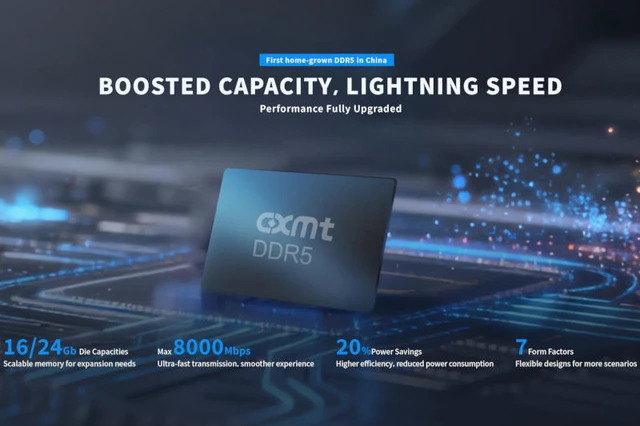 The Price of Acceleration: CXMT’s Rapid Push into Memory