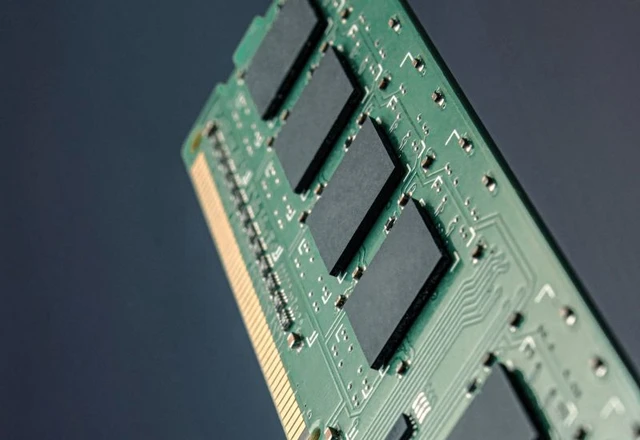
The global semiconductor race has decisively shifted from a pursuit of economic efficiency to a matter of national security. Washington is aggressively pursuing an "onshoring" strategy, aiming to decouple itself from the vulnerabilities of East Asian supply chains. As Micron lays the groundwork for a new industrial era, the U.S. government is now turning its gaze toward the South Korean titans. This mounting pressure on Samsung and SK hynix signals a new phase in the battle for technological sovereignty and the strategic control of critical components.
The modern digital economy, particularly in the era of generative AI's meteoric rise, is fundamentally dependent on the availability of high-performance memory. Without DRAM and NAND flash, even the most powerful GPUs are rendered useless. Consequently, the U.S. government has pivoted from a strategy of incentives to one of direct coercion, seeking to forcibly migrate critical production capacities from Asia to American soil.
The catalyst for this new wave of expansion is the massive scaling of Micron Technology. The American manufacturer is not merely constructing a new complex in New York; it is fundamentally redefining its long-term strategy, ramping up investments in the national semiconductor industry to $250 billion by 2035. Micron’s objective is ambitious: to onshore up to 40% of all DRAM production. This move establishes a powerful precedent and serves as the benchmark by which Washington now intends to measure the loyalty and contribution of its foreign partners.
However, the current footprint of South Korean market leaders in the U.S. falls short of the White House's strategic expectations. Samsung Electronics, which has maintained production sites in Texas since the mid-nineties, is currently focused on establishing advanced foundries for logic components. Meanwhile, SK hynix is developing chip packaging facilities in Indiana—a critical final stage of production, yet one that does not grant full control over the technological cycle. Neither company is currently engaged in the actual wafer fabrication required to produce memory on U.S. soil.
Commerce Secretary Howard Lutnick has been explicit: the time has come to disrupt this status quo. Washington's logic is straightforward: for the market to achieve genuine resilience, Micron cannot stand alone. Despite the inherent friction of competitors sharing the same geography, the presence of Samsung and SK hynix in the U.S. is viewed as a necessity to saturate the domestic market and cultivate a comprehensive industrial cluster.
This dynamic is creating significant tension between corporate interests and state pressure. Samsung and SK hynix have already announced staggering investments totaling $880 billion to expand their own capacities in South Korea, striving to maintain their technological hegemony in their home region. Furthermore, SK hynix’s active utilization of U.S. capital markets to raise funds leaves the company particularly susceptible to American political leverage.
Against the backdrop of these demands, the U.S. administration's tactical silence regarding Apple is particularly telling. The question of whether Apple will utilize memory from Chinese manufacturers CXMT and YMTC for devices destined for the PRC market remains unanswered. This ambiguity underscores a duality in the U.S. approach: while Washington pursues total autonomy, entrenched market ties with China continue to necessitate complex trade-offs that the government is not yet prepared to address publicly.

 Nvidia’s Technological Pragmatism in the Open-Model Race