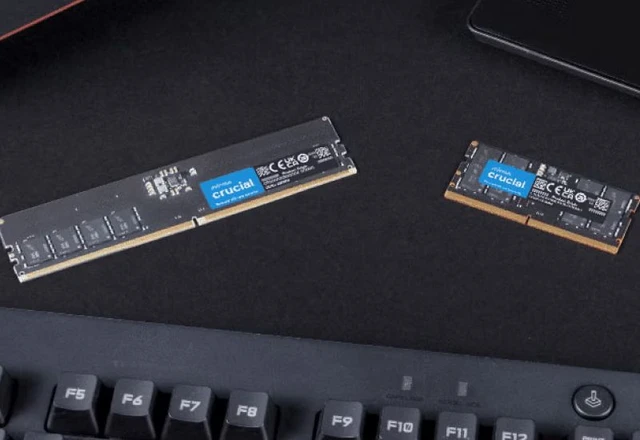
For decades, the global memory market has been held in the grip of a handful of tech titans—a concentration of power that has created a precarious environment for the consumer sector. The meteoric rise of generative AI has fundamentally realigned manufacturer priorities, pivoting the industry's focus away from commodity standards toward high-margin, specialized solutions. Now, a sweeping class-action lawsuit in the United States alleges that these industry leaders deliberately throttled the supply of conventional memory. This legal battle exposes a profound systemic vulnerability: the fragility of the modern electronics ecosystem when faced with an entrenched oligopoly.
The contemporary DRAM landscape is a textbook oligopoly, with Samsung, SK hynix, and Micron effectively dictating the terms of engagement. In an industry where the barrier to entry is measured in tens of billions of dollars in fab investments and years of rigorous technological preparation, the emergence of new players is virtually impossible. This structural insularity renders the market acutely sensitive to any strategic shift by the dominant suppliers.
The core of the current conflict lies in a pivotal shift in production capacity. With the dawn of the era of Large Language Models (LLMs) and neural networks, demand for High Bandwidth Memory (HBM) has surged exponentially. HBM is the backbone of AI accelerators and data center server equipment, providing the massive throughput essential for training neural networks. The critical issue is that HBM production competes for the same fabrication resources and cleanroom footprints as traditional DDR3 and DDR4 memory.
According to the legal filings, the three industry titans acted in concert: they simultaneously slashed the output of standard memory to pivot as rapidly as possible toward the more lucrative HBM segment. In a truly competitive environment, at least one supplier would have capitalized on the resulting shortage by increasing DDR production to seize a larger market share. The fact that this did not happen suggests, according to the plaintiffs, an implicit collusion designed to artificially inflate prices.
Such scenarios are hardly unprecedented in the semiconductor industry. In 2005, the U.S. Department of Justice dealt with a similar price-fixing scheme in the DRAM market. At that time, Samsung and SK hynix pleaded guilty, while Micron managed to evade sanctions by cooperating with the investigation. The current allegations suggest that the industry has reverted to these legacy methods of market control, using a technological transition as a smokescreen for price manipulation.
The consequences of this strategy have already transcended corporate balance sheets, hitting the end consumer directly. The rising cost of memory chips is triggering a cascading effect on the price of finished devices. A prime example is the situation with the Xbox Series X and Series S consoles, where prices are climbing due to a doubling in the cost of memory components. A similar effect is visible in the compact gaming PC segment, such as the Steam Machine, where the final retail price has significantly exceeded original projections.
Ultimately, the technological surge in AI—which was intended to benefit society at large—has been weaponized as an instrument of economic leverage. While the industry chases the computational power required for neural networks, basic memory standards are becoming a scarce resource, raising serious questions about the ethics governing the development of modern hardware.
 The Evolution of the Apple Home Ecosystem