The global race to develop general-purpose humanoid robots is shifting from the realm of engineering prototypes into a phase of aggressive market capitalization. Unitree's debut on the Shanghai Stock Exchange marks a watershed moment, underscoring the immense investor appetite for high-tech assets. The explosive surge in share value reflects more than just the success of a single product; it signals the market's conviction in the synergy between artificial intelligence and cutting-edge robotics. This case highlights China's strategic ambition to secure a dominant position in an industry poised to fundamentally reshape the global labor market.
The "first-mover advantage" has become one of the most potent growth catalysts in today's Chinese stock market. For companies operating at the vanguard of technological progress, an early IPO allows them to accumulate significant resources by capitalizing on peak investor appetite. The Unitree case serves as a textbook example of this thesis: immediately following its debut on the Shanghai Stock Exchange, the company's share price surged 629% relative to its offering price.
Unitree's valuation trajectory was so aggressive that it outstripped even the memory manufacturer CXMT, which saw a 466% increase late last month. Currently, a single share of the robotics manufacturer is valued at 1,100 yuan. While the company raised 6.1 billion yuan (approximately $905 million) during its initial public offering with a valuation of $9 billion, its market capitalization effectively skyrocketed to $66 billion within the first few days of trading.
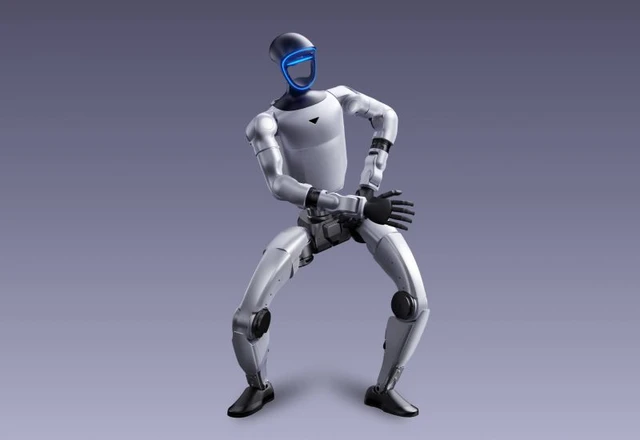
This financial triumph was underpinned by a massive technological breakthrough. On the eve of its IPO, the company unveiled its new humanoid robot, aptly named "Superman." The machine demonstrates impressive kinematic capabilities, including the ability to jump two meters high and reach running speeds of 12.66 meters per second—effectively surpassing the physical limits of a human athlete.
The story of Unitree is one of evolution, moving from niche applications to general-purpose platforms. Founded in 2016 by a former DJI executive, the company initially focused on developing quadrupedal "robodogs." However, by 2023, the strategic pivot shifted toward humanoid systems. This transition coincided with the generative AI boom, enabling the integration of complex cognitive functions into the robots' physical embodiments. The timing of the IPO was also surgically precise, aligning with the World Robot Conference and the launch of the World Humanoid Robot Games.
Behind Unitree's success lies a formidable consortium of tech giants. Shareholders include heavyweights such as Tencent, Alibaba, Meituan, and DeepSeek, providing the company not only with a substantial financial runway but also with access to cutting-edge machine learning algorithms.
Today, the robotics landscape in China is incredibly crowded, with approximately 140 companies striving to establish mass production of humanoid robots. According to Morgan Stanley forecasts, the global market will absorb around 50,000 such units this year, with volume reaching 446,000 units by the end of the decade. In such a competitive environment, Unitree possesses a critical advantage in financial stability. Between 2023 and 2025, the company's revenue grew more than tenfold, and by 2024, the business reached its break-even point. Notably, the profit margin hit 60.1%, an exceptional figure for the high-tech sector. Demand during the IPO was so intense that subscriptions exceeded the offering volume by 8,000 times.
Despite geopolitical volatility and looming US restrictions on the import of Chinese robots, Unitree has managed to implement an agile expansion strategy. The company proactively secured permits to ship its G1, H2, and R1 humanoid models to the US market. Furthermore, its quadruped series—the Go2, B2, and A2—fall outside the scope of these bans, allowing the company to maintain its American presence. While newer models may face hurdles, the current product portfolio provides Unitree with the necessary strategic beachhead for global influence.
 Anthropic’s Strategic Push for Hardware Independence