Today's global AI arms race is defined not merely by algorithmic sophistication, but by access to massive computational power. Faced with stringent US export controls, Chinese players have been forced to navigate intricate workarounds to scale their Large Language Models (LLMs). The ascent of the startup Moonshot and its Kimi model family serves as a compelling case study in how strategic investment and infrastructure leasing can circumvent a technological blockade. At the heart of this dynamic lies Alibaba—a titan that has effectively forged a potent weapon for what may become its own future rival.
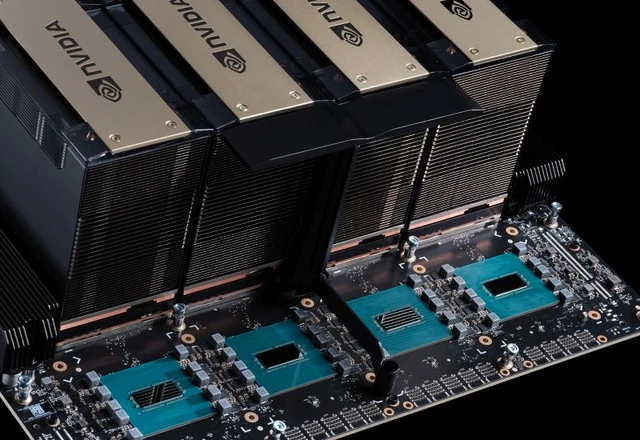
Modern LLM training demands more than just raw horsepower; it requires massive clusters capable of operating as a single, cohesive organism. For the startup Moonshot, this foundation was built upon access to Alibaba's resources. Reports indicate that the Kimi series models were trained on a computational cluster comprising 20,000 Nvidia Hopper-generation accelerators—specifically H200 chips. While these solutions are technically superseded by the latest Blackwell line, their sheer volume and orchestration provide the compute density necessary to achieve high-quality neural network outputs.
The relationship between Alibaba and Moonshot is deeply strategic. As a key investor, Alibaba follows a traditional support model: financial injections paired with access to its proprietary cloud infrastructure. Consequently, capacity leasing has become the primary resource channel for Moonshot, allowing the company to bypass the complexities of direct hardware procurement. Although Alibaba representatives have officially distanced themselves from confirming the specific lease of H200s, the existence of a 20,000-chip Nvidia cluster remains the undeniable bedrock of their partnership.
However, this synergy has sparked an internal conflict of interest. Kimi's models are delivering impressive results, beginning to compete seriously with the Qwen family—Alibaba's own proprietary developments. The corporation now finds itself in a paradoxical position where its investment strategy and generosity with resources have helped cultivate a formidable rival within the domestic market.
Simultaneously, a more complex geopolitical game is unfolding. US regulators are expressing concern that Chinese firms, including Moonshot and DeepSeek, may have gained access to the even more advanced Blackwell chips. It is suspected that this access is facilitated through capacity rentals from third-party companies based in neutral jurisdictions, such as Thailand. Since US law prohibits the sale of cutting-edge accelerators to China but leaves loopholes for overseas leasing, such schemes have become the primary mechanism for circumventing sanctions.
Beyond hardware, the success of Kimi—specifically version K3—may be attributed to knowledge distillation techniques. There is a strong possibility that the developers utilized Anthropic's advanced Fable model as a "teacher." Distillation allows the cognitive capabilities of a massive, costly model to be transferred into a more compact and efficient architecture, enabling high performance even with limited computational resources. Thus, Kimi's technological breakthrough is the result of a trifecta: the massive deployment of Hopper clusters, flexible overseas hardware leasing schemes, and the intelligent optimization of training algorithms.
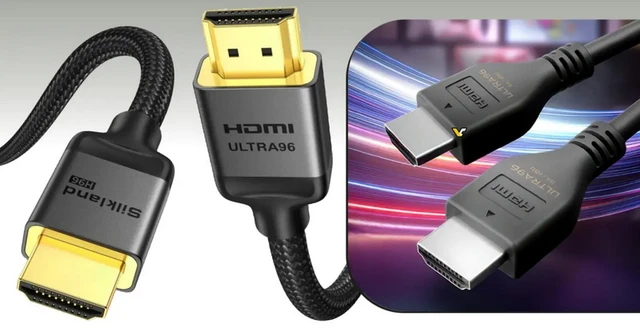 HDMI 2.2: The New Standard for Data Transmission