For decades, modern graphical user interfaces have been confined by the physical constraints of the monitor, creating an artificial bottleneck for multitasking. The emergence of next-generation window management tools signals a fundamental shift from static desktops toward dynamic spatial environments. The release of Nourish 1.0.0 proposes a radical reimagining of content interaction, transforming the screen into a gateway to an infinite digital canvas. Engineered in Rust, this project seeks to dissolve the boundary between the physical display and the virtual workspace.
At its core, Nourish is built upon the concept of a dimensionless workspace. Unlike traditional window managers that confine the user to the physical resolution of their display, Nourish deploys windows onto an infinite canvas. This enables fluid navigation through panning and zooming while maintaining absolute visual clarity. Such an approach transforms window management from a mere arrangement of rectangles into a comprehensive spatial orchestration of data.
The project's technical stack is engineered for peak performance and reliability. The choice of Rust ensures high memory safety, which is critical for a system component of this level. For interface rendering, the system leverages the modern Vulkan API to maximize GPU resource utilization, while maintaining an OpenGL fallback to ensure compatibility with legacy hardware.
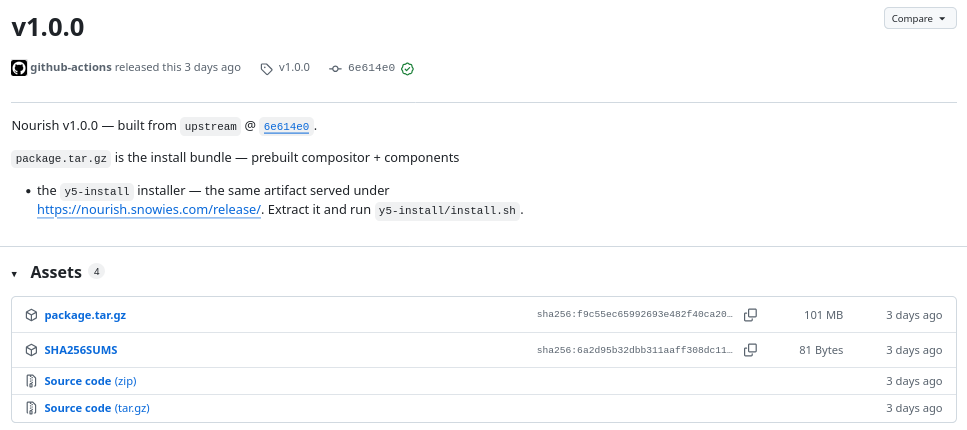
To achieve seamless scaling without sacrificing image quality, Nourish relies on the Wayland protocol and a specialized fractional-scale extension. This eliminates the "blurring" effect common in many systems during window resizing, ensuring visual fidelity even under extreme zoom levels. Thanks to Mesa support, the server maintains cross-platform compatibility across leading vendors, including Nvidia, Intel, and AMD.
The organizational logic of Nourish transcends simple window grouping. The system allows users to aggregate applications into named groups that can be collapsed or expanded to full screen, creating highly structured workspaces. A pivotal feature is state determinism: the entire layout and window positioning are saved automatically. This guarantees that after a system reboot or an unexpected process termination, the user returns to the exact workspace configuration where they left off.
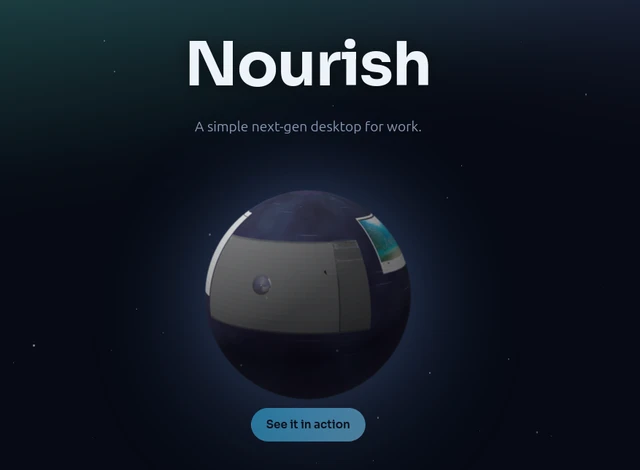
Navigation across this vast data array is handled via a multi-tiered system. Beyond standard hotkeys for task switching, Nourish introduces an impressive 3D navigation interface in the form of a mosaic globe map. This visual tool allows users to quickly grasp the scale of their entire workspace and instantly jump to any specific segment.
Rounding out the feature set are advanced screen capture tools. The screencasting and screenshot capabilities in Nourish are specifically tailored for the infinite canvas. Recordings can target individual windows or designated spatial regions, capturing real-time panning and zooming dynamics—making it an indispensable tool for demonstrating complex workflows.
Distributed under MIT and Apache 2.0 open-source licenses, and supporting current distributions such as Fedora 44, Nourish is positioned as an accessible gateway for users seeking a new standard of OS interaction.
 The Price of Acceleration: CXMT’s Rapid Push into Memory