The global shift toward environmental sustainability and the crusade against planned obsolescence have culminated in the establishment of rigorous legislative frameworks within the European Union. The effort to institutionalize the "Right to Repair" was envisioned as a means of restoring device ownership and control to the legitimate consumer. In practice, however, the collision between these idealistic mandates and the commercial imperatives of Big Tech has exposed a profound systemic crisis. Today, pledges of transparency have devolved into mere formalities, serving as a veil for the stark realities of the industry.
The concept of the "Right to Repair" has long evolved beyond mere eco-activist slogans, transforming into a potent regulatory instrument. In the European Union, a system was implemented mandating that smartphone and tablet manufacturers provide transparent data regarding the repairability of their devices. Under regulations that took effect in June 2025, every device must be accompanied by an objective assessment and accessible information on spare part costs and replacement methods. However, a year into the initiative, it has become evident that the industry has opted for performative compliance rather than fundamentally altering its business processes.
An analysis of the EU Energy Labeling product registry reveals a catastrophic disconnect between legal requirements and reality. Of more than two thousand smartphone models released over the past year, only 18% contain up-to-date links to repair manuals or parts price lists. The vast majority of entries are either left blank or redirect to generic support pages, leaving the user in an informational void.
The situation is particularly cynical regarding the self-assessment system. Manufacturers who effectively ignore disclosure requirements continue to assign their devices top repairability scores, claiming "Class A" compliance. This creates a dangerous illusion of service accessibility for the consumer. Even in the rare instances where component prices are listed, they are often presented as absurd ranges—for example, a battery replacement might vary from €14 to €128—rendering any preliminary cost estimation meaningless.
The problem is exacerbated by the fact that even technically "compliant" products employ dark patterns to obstruct access to information. For giants like Apple and Samsung, finding an actual parts price list becomes a multi-stage odyssey, requiring numerous clicks and navigation through convoluted support sections. This suggests that corporations view EU legislation not as a roadmap for action, but as an obstacle to be bypassed using the minimum permissible means.
This state of affairs has been enabled by a systemic lack of oversight. EU regulatory bodies have essentially left the registry without proper auditing, allowing thousands of empty fields to persist openly. Consequently, the burden of verifying data accuracy has been shifted onto the manufacturers themselves, creating a direct conflict of interest.
The expert community, including representatives from iFixit, is calling for a radical shift in approach. To prevent repairability scores from becoming mere marketing gimmicks, manufacturers must publish the full technical documentation upon which specific scores are based. Only transparency in methodology will allow independent repair shops and consumers to validate brand claims. Furthermore, a streamlined mechanism for filing complaints regarding discrepancies between declared characteristics and actual device performance is essential.
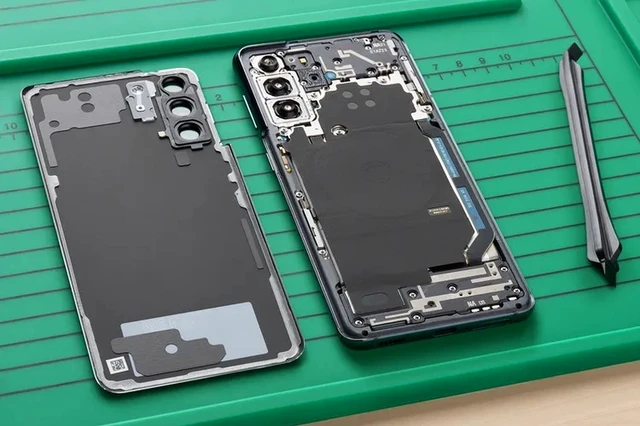
Nevertheless, the industry faces a new wave of pressure. In February of next year, even more stringent requirements will take effect, shifting the discourse from "informational accessibility" to physical engineering. New mobile devices must be equipped with batteries that users can replace independently, without the need for specialized equipment. This will pose a genuine challenge to modern engineering philosophy, which has long favored sealed chassis and components rigidly fixed with adhesives.
 New Frontiers in Kirin Transistor Density