Modern autonomous driving systems promise to liberate us from the drudgery of the road, yet in practice, they carve out a perilous zone of cognitive dissonance. The tragedy in Texas serves as a stark reminder of just how fragile the interface between driver and algorithm remains. When technology shifts into a state of passive monitoring, any lapse in human judgment can prove fatal. The investigation into this incident exposes a critical systemic flaw: the danger of over-reliance on automation.
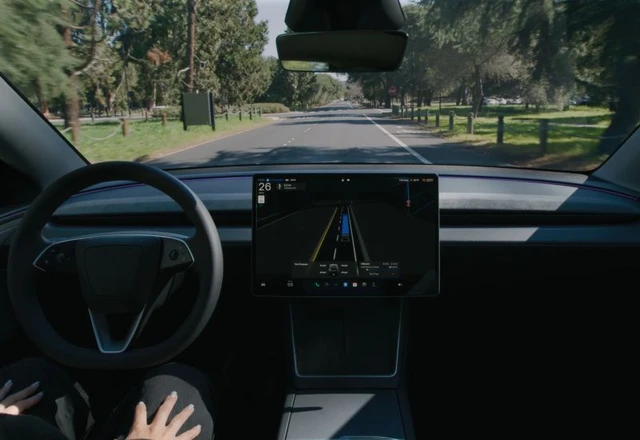
The discrepancy between driver testimony and telemetry data often becomes the focal point of investigations into electric vehicle accidents. In a recent Texas incident, where a Tesla Model 3 crashed through the wall of a residential home at high speed, the initial narratives were diametrically opposed. While the defendant insisted that Full Self-Driving (FSD) was active at the moment of impact, the manufacturer maintained that human control had been resumed seconds before the collision.
A preliminary report from the National Transportation Safety Board (NTSB) vindicated Tesla’s position. Analysis revealed that as the driver approached an intersection, they depressed the accelerator pedal fully. Within Tesla's system logic, such an action is interpreted as a conscious decision by the operator to override the system—for instance, to perform an emergency maneuver or rapid acceleration. At that precise moment, FSD disengages instantaneously, handing full control back to the human driver.
This action resulted in a sudden surge in speed to 112 km/h in a zone with a limit of just 48 km/h. The vehicle effectively launched off the road, breaching the wall of a home where a 76-year-old woman was located. The tragedy resulted in a fatality and led to manslaughter charges against the 44-year-old driver.
Notably, external conditions were optimal: clear weather, dry pavement, and full daylight eliminated any technical failures caused by poor visibility or road surface issues. This shifts the discourse from "algorithmic error" to the realms of human psychology and ergonomics.
Experts frequently cite the phenomenon of "pedal misapplication," which is particularly acute in electric vehicles due to their instantaneous torque. Unlike internal combustion engines, where acceleration involves a perceptible lag, an EV responds to accelerator input with lightning speed. If a driver, under stress or distraction, mistakes the pedal, the vehicle transforms into an uncontrollable projectile.
This case highlights a fundamental flaw in Level 2 autonomy systems. Despite marketing labels like "Full Self-Driving," the burden of safety rests entirely with the human operator. When a driver begins to perceive the system as a fully capable pilot, their vigilance wanes and reaction times in critical situations slow down. The result is a perilous disconnect: the vehicle assumes the human is acting intentionally, while the human believes the algorithm is in command.
 Nvidia N1X and the New Era of Arm PCs