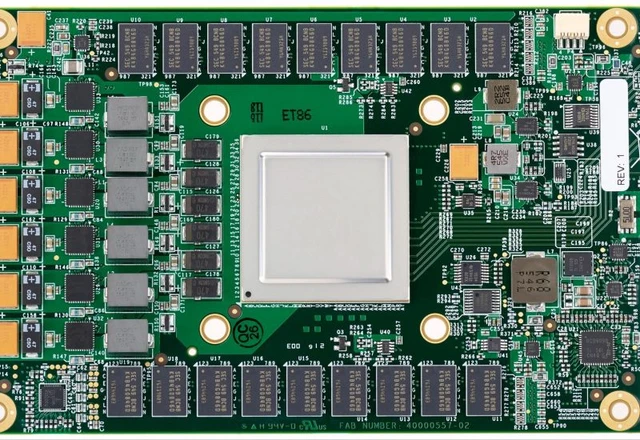
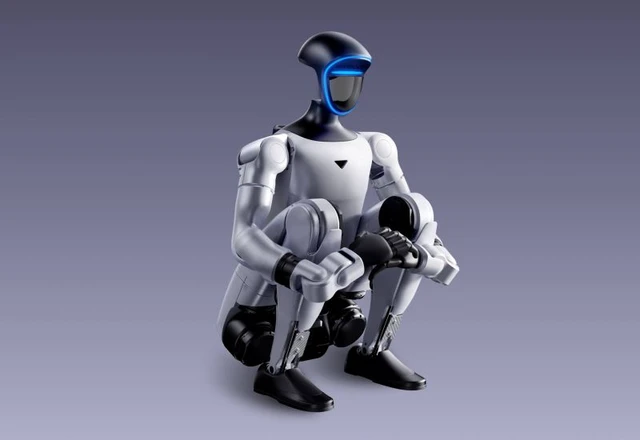
The vision of widespread humanoid assistants is definitively migrating from the realm of science fiction into the domain of industrial strategy. While mechanical engineering has seen impressive strides, the primary bottleneck remains the cognitive divide between physical execution and a nuanced, intellectual comprehension of the environment. The industry is now anticipating its own "ChatGPT moment"—a breakthrough that will seamlessly integrate sophisticated actuators with agile, adaptive artificial intelligence. This paradigm shift is set to redefine the consumer landscape and the fabric of daily life over the coming decade.
Modern robotics has reached a paradoxical juncture: physical capabilities are evolving far more rapidly than the capacity to perceive and comprehend the surrounding environment. Today's humanoids demonstrate stunning agility within the sterile confines of laboratories or strictly controlled factory floors; however, any deviation from a predefined script transforms these high-tech devices into helpless mechanisms. The core issue is a lack of universality—the ability of a robot to adapt to unfamiliar settings and accurately interpret human commands.
The critical benchmark for mass-market viability will be the crossing of this threshold. The industry gold standard is defined as the ability of a robot to successfully execute at least 80% of voice or text instructions under conditions of uncertainty. Only when a machine can independently navigate the chaos of the real world, without losing the thread of a task during the slightest contextual shift, will demand for such devices enter a phase of exponential growth.
This transition demands a fundamental pivot in development priorities. While previous evolutionary stages focused on kinematics, balance, and the energy efficiency of actuators, the center of gravity is now shifting toward the creation of "Embodied AI." This represents a synthesis of Large Language Models (LLMs) and sensorimotor skills, where AI does not merely generate text but controls a physical body in real-time. It is the development of this "digital brain" that is attracting the bulk of investment resources, including a significant portion of the capital raised through the public offerings of the market's leading players.
A software breakthrough on the scale of ChatGPT is anticipated within the next two to three years. This will allow robots to move away from rigid programming toward learning based on experience and interaction. According to optimistic forecasts, by 2028, machines will be able to autonomously perform up to 80% of everyday tasks without requiring specialized training for every specific operation.
Market dynamics underscore the velocity of this evolution. While global humanoid sales were measured in the low thousands just a year ago, by the end of the decade, we could be talking about millions of units. China currently holds the dominant position, effectively becoming the world's primary proving ground for robotic solutions. A massive share of global production is concentrated in this region, providing companies with access to colossal datasets and an unparalleled manufacturing base.
The complete transformation cycle—from laboratory prototype to mass-market consumer appliance—will span approximately a decade. This period will mark the transition from "smart tools" to fully autonomous agents capable of seamless human interaction in any environment.
 The Price of Acceleration: CXMT’s Rapid Push into Memory