The race for Low Earth Orbit (LEO) has decisively shifted from a theater of geopolitical rivalry to a matter of commercial reliability. NASA’s decision to deepen its partnership with SpaceX underscores a pivotal shift in the logistics of space exploration. Despite its efforts to diversify its provider base, the agency has ultimately found itself reliant on a single, albeit proven, operator. This new contract does more than just secure crew rotations; it marks a strategic pivot away from troubled alternatives.
NASA has formally solidified SpaceX's role as the primary transport provider for the International Space Station, securing an agreement for three additional crewed missions: Crew-15, Crew-16, and Crew-17. This contract extension is valued at $946 million. In effect, the agency has redistributed resources originally earmarked for Boeing's Starliner, whose persistent technical hurdles and certification bottlenecks have left its operational viability in limbo.
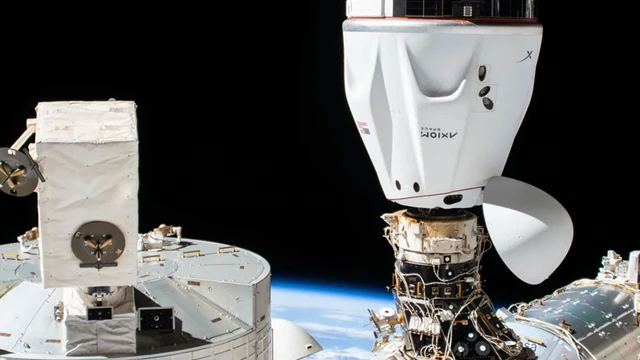
The contract is structured as a fixed-price agreement covering the entire spectrum of safety and logistics. This encompasses not only the launches and ground operations but also cargo transport, orbital management of the Dragon spacecraft, and the crew's return to Earth. Of particular strategic importance is the "lifeboat" capability: the Crew Dragon must remain in a state of constant readiness to facilitate the emergency evacuation of ISS personnel in the event of a critical station failure.
Financial analysis of the deal reveals a marginal increase in costs; flight prices have risen by approximately 10%, amounting to roughly $28 million compared to previous program phases. Given the virtual absence of alternatives capable of delivering an equivalent level of safety and reliability, such a premium is negligible. Despite its dominant market position, SpaceX has refrained from exercising aggressive leverage over the client, underscoring the company's pragmatic approach to long-term partnership.
Against this backdrop, Boeing's position remains precarious. Despite massive NASA investments in the development of Starliner, the program has failed to produce tangible milestones comparable to the successes of Dragon. While industry discussions continue regarding potential paths to resuscitate the Boeing project—including support for the certification of new launch vehicles like ULA's Vulcan or Blue Origin's New Glenn—this latest SpaceX contract sends a clear signal: through 2030, the priority remains proven solutions.
Under the new agreement, the total number of SpaceX missions within the Commercial Crew Program will reach 17, bringing the cumulative contract value to $5.92 billion. The new expeditions are slated for 2027 and 2028, ensuring a stable crew rotation schedule for the next decade.
The technical architecture remains unchanged: the pairing of the partially reusable Falcon 9 rocket and the Crew Dragon spacecraft. This system, certified by NASA in November 2020, has proven its efficacy, capable of delivering up to four astronauts and significant payloads to orbit. By September 2026, the company will have successfully executed 12 rotation missions, with preparations for the thirteenth expedition now in their final stages.
Despite a clear lean toward a single contractor, NASA formally retains the right to engage other operators as they become mission-ready. However, current dynamics demonstrate that in modern astronautics, rapid iteration cycles and real-world operational experience are valued far more highly than theoretical promises and government preferences.
 Anthropic’s Path to a Two-Trillion-Dollar Valuation