For years, the prevailing industry consensus was that solid-state drives would inevitably relegate magnetic storage to a handful of narrow niches. However, the meteoric rise of generative AI has fundamentally rewritten the playbook. The staggering scale of data required for these models demands massive storage capacities, where cost-per-terabyte remains the critical deciding factor. This shift has triggered an unexpected industrial renaissance, compelling HDD manufacturers to aggressively ramp up production capacities once again.
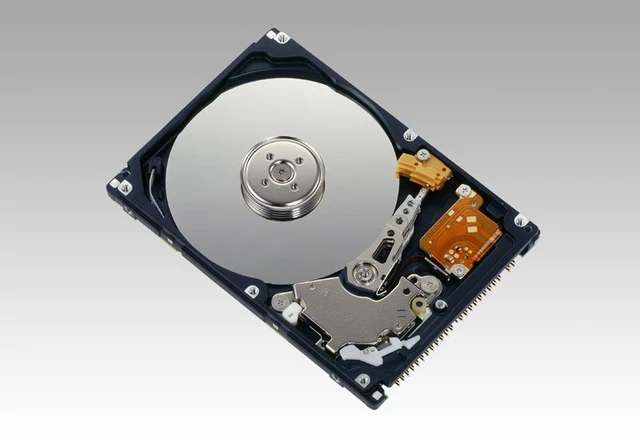
The era of Big Data and Machine Learning has birthed a paradox: while the world pursues maximum access speeds, the fundamental need for affordable, high-capacity storage has restored magnetic drives to the status of a strategic resource. In the server segment, hard disk drives (HDDs) remain indispensable for managing "cold data"—information that must be accessible but does not require the instantaneous response times characteristic of NVMe storage.
Today, the HDD market is defined by a tight oligopoly. The bulk of shipments are controlled by American giants Western Digital and Seagate Technology, each commanding over 40% of the market, with Japan's Toshiba rounding out the top three with a 17% share. The primary growth drivers are the cloud hyperscalers—Google, Microsoft, and Amazon (AWS)—who procure up to 60% of all nearline-class products. This concentrated demand has triggered a steady price increase for server drives, rising by 10% over the last quarter.
The technological arms race has shifted toward areal density. The industry is striving to break the 40 TB threshold, and each key player has charted a different course to achieve this goal. Western Digital is betting on HAMR (Heat-Assisted Magnetic Recording). This method employs a laser to locally heat the magnetic platter immediately before writing, allowing for smaller magnetic grains and significantly higher data density. According to the company's roadmap, such drives will reach capacities of 100 TB by 2029.
Seagate has already integrated similar solutions into its product line, offering devices with capacities up to 44 TB, with plans for further scaling toward 100 TB through recording density optimization. Meanwhile, Toshiba is developing an alternative approach: MAMR (Microwave-Assisted Magnetic Recording). By utilizing microwave radiation instead of heat, they can achieve high capacity—currently in the 30 to 34 TB range—with reduced component wear. The Japanese manufacturer is expected to surpass the 40 TB mark as early as next year.
However, the push for higher capacities necessitates a complete overhaul of the production chain. Magnetic heads, glass substrates, and precision printed circuit boards are becoming bottleneck components. This has triggered a chain reaction of capacity expansion among suppliers. For instance, platter manufacturer Resonac is increasing the capacity of its Singapore complex by 31%, while HOYA, specializing in glass substrates, is investing in a new facility in Vietnam to be completed by 2028. TDK is also scaling the production of magnetic heads and actuator elements to satisfy the growing appetite of data centers.
Ultimately, the evolution of AI has created a symbiosis: while SSDs provide lightning-fast processing for neural network weights and operational data, classic HDDs serve as the bedrock upon which the entire global infrastructure of knowledge storage rests. Magnetic recording has not merely survived; it has found a new purpose in a world where data has become the primary currency.
 Energy Autonomy: The Extreme Edition