The gaming industry is entering a period of severe economic turbulence, where hardware pricing has ceased to be a constant. Global component shortages and logistical bottlenecks are forcing the market's primary stakeholders to radically overhaul their pricing strategies. Recent price adjustments for Xbox consoles across the US and Europe serve as a stark indicator of a profound systemic crisis within global supply chains. Consequently, access to high-performance computing for gaming is becoming markedly more expensive.
Since August of this year, the gaming console market has been swept by yet another wave of price hikes. Microsoft, having previously limited its warnings to price increases within North America, has now expanded these corrections to Europe and the UK. This represents a substantial revision of the pricing structure for the entire Xbox Series X/S lineup, effectively shifting the market positioning of these devices.
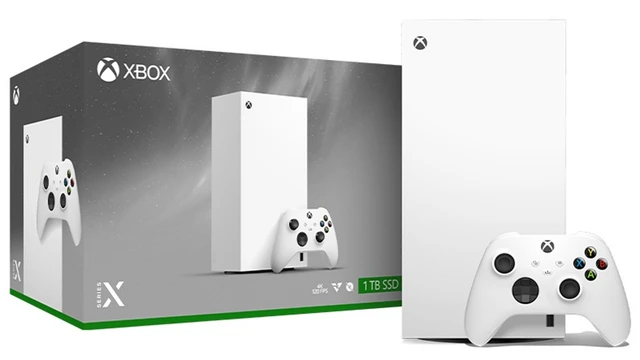
The budget segment has borne the brunt of this shift. The Xbox Series S with 512GB of storage has seen an increase of $100 in the US and €150 in Europe, reaching a price point of $499.99. A similar trend is evident for the 1TB version, which has climbed to €599.99 in the European market. The flagship Xbox Series X was not spared either: the digital edition is now valued at $749.99, while the disc-drive model has hit the psychological threshold of $799.99 across US and European markets.
Viewed in retrospect, it becomes clear that we are witnessing a sustained upward trajectory rather than a one-off spike. Since the consoles launched in 2020, the cost of the Xbox Series X (Disc) has climbed by $300, while the entry-level Series S has seen an impressive price surge of 50%. Such dynamics suggest that initial profitability projections for the hardware were fundamentally flawed in the face of a shifting global economy.
The catalyst for this aggressive pricing strategy is a deep-seated component crisis that has paralyzed the consumer electronics sector. The primary impact has been felt in the cost of memory and data storage—critical elements for modern consoles given their stringent requirements for load speeds and capacity. According to internal company data, the costs for these components have increased more than 2.5 times. Furthermore, the outlook remains grim: forecasts suggest that memory costs could potentially double again by autumn 2027.
This is a systemic issue affecting all major industry players. Sony has faced analogous challenges, leading to significant price increases across the PlayStation 5 lineup. Specifically, the PS5 Digital Edition has risen to $599.99, while the premium PS5 Pro received a $150 markup, reaching a price of $899.99.
Ultimately, the console gaming industry is effectively conceding its helplessness in the face of semiconductor costs and logistical overheads. The era of affordable hardware with fixed pricing throughout a generation's lifecycle has likely come to an end, giving way to a model of flexible—and often painful—dynamic pricing for the consumer.
 Analog Aesthetics in Digital Execution