The AI boom has ignited an unprecedented surge in demand for computational power, elevating semiconductors to the status of the era's most critical strategic asset. At the heart of this dependency lies ASML, the sole provider of the equipment essential for manufacturing next-generation chips. The current scarcity of lithography systems has reached such a critical juncture that the company is being compelled to scale its production capacity to address order backlogs spanning several years. This bottleneck exposes a fundamental vulnerability within the global tech supply chain: the progress of an entire industry now hinges upon a single manufacturer.
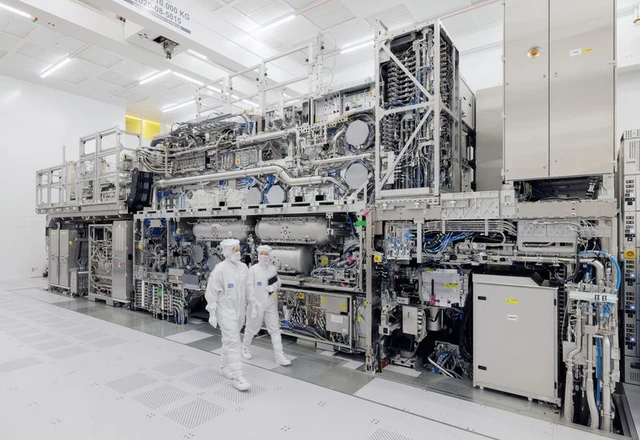
The contemporary microelectronics landscape has effectively evolved into a de facto monopoly, with ASML controlling approximately 94% of the supply of lithography scanners. These systems are the sole instruments capable of etching intricate circuit topologies onto silicon wafers with nanometer precision. Driven by the meteoric rise of generative AI, demand for such systems has shattered all forecasts, leading the company to officially acknowledge that its current capacities are struggling to keep pace with the load.
As of today, all production slots for standard EUV (Extreme Ultraviolet) systems—each costing up to $200 million—are fully allocated through the end of 2027. To alleviate this technological bottleneck, ASML has broken ground on a new facility in the Netherlands. This move is driven not merely by a desire to scale profits, but by intense pressure from the world's leading tech titans, who are demanding accelerated deliveries to secure their own competitive advantages.
The industry now stands on the precipice of its next evolutionary milestone: the implementation of High-NA (High Numerical Aperture) systems. This equipment represents a quantum leap in lithography, enabling the creation of semiconductor structures 40% smaller than those produced by conventional EUV scanners. However, such progress comes at a steep premium—the cost of a single High-NA installation can exceed $400 million.
Adoption strategies vary significantly among the market's key players. Intel has positioned itself as an aggressive first-mover, already reporting the processing of one million 300mm wafers on its new systems. Conversely, TSMC—the primary partner for Apple and Nvidia—is exercising greater caution, planning a full-scale transition to High-NA only by 2030.
An interesting dynamic is unfolding within the memory sector. Samsung Electronics and SK hynix intend to integrate next-generation equipment as early as 2028. For memory manufacturers, packing density is critical, making them more inclined to adopt High-NA faster than logic chip producers. Micron Technology is also ordering sample systems, though it has refrained from committing to a precise timeline for mass deployment.
It is worth noting that ASML remains an unrivaled player. Efforts by Japanese and Chinese firms to develop comparable lithography systems have yet to yield success; no competitor has managed to move their designs into the stage of commercial mass production. The sheer complexity of EUV technology has created a technological chasm between the leader and its pursuers that remains virtually insurmountable.
In the current climate, it is becoming evident that we are not at the zenith, but rather at the dawn of the AI industry's growth cycle. Demand for equipment will only intensify, transforming lithographic capacity into the primary bellwether for the health of the entire global high-tech economy.
 Anthropic’s Strategic Financial Surge Ahead of Its IPO