The global artificial intelligence market has encountered an unexpected disruption, originating from within the industry's own ranks. Calls from the architects of leading U.S. research labs to decelerate development in the name of safety have triggered acute volatility across Asian financial markets. The deep interdependence between software titans and hardware manufacturers has effectively transmuted ethical debates into tangible financial losses. The industry is now grappling with the delicate balance between mitigating existential risks and navigating the pressures of fierce geopolitical competition.
The generative AI industry, long sustained by a state of near-religious fervor, has suddenly collided with an internal crisis of identity. The leaders of OpenAI and Anthropic—the primary architects of the modern neural network revolution—have issued an unexpectedly unified call for a deceleration in development. Their reasoning is as simple as it is chilling: the pace of model evolution is outstripping humanity's ability to ensure their safety. Yet, while this may appear as an ethical gesture within Silicon Valley, for global markets, it has served as a clarion call for alarm.
The reaction from Asian markets was instantaneous and severe. Because the advancement of Large Language Models (LLMs) is inextricably linked to computational capacity, any discourse regarding a "slowdown" is interpreted by the market as a decline in future hardware demand. SoftBank, which has invested heavily in infrastructure for OpenAI, bore the brunt of this volatility, with its shares plummeting by 13.2%.
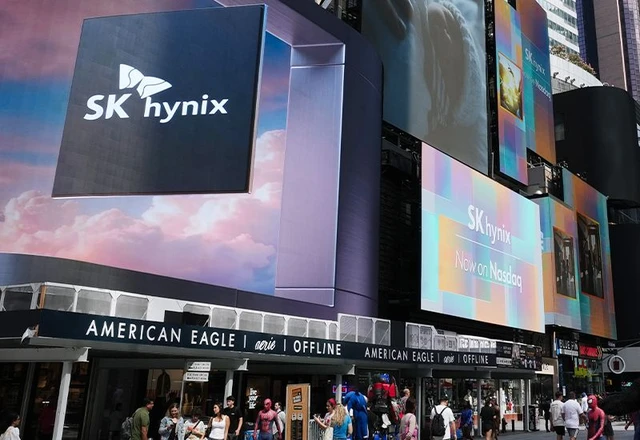
The chain reaction rippled through the entire technological stack. The Japanese memory manufacturer Kioxia lost nearly 10% of its value, while equipment supplier Tokyo Electron dipped by 3.7%. Even titans such as Taiwan's TSMC, and South Korea's Samsung Electronics and SK hynix, could not escape the correction, sliding between 1.2% and 5.3%. This underscores the fragility of the entire ecosystem: the moment software visionaries begin discussing risk, the market immediately reprices the value of silicon and memory.
The situation is further complicated by external geopolitical pressures. Instability in the Middle East creates additional risks for logistics and energy supplies to Taiwan, which remains the critical nexus for the production of cutting-edge chips. In this climate of uncertainty, even China-centric firms like SMIC and CXMT showed a downward trend. Particularly bruising was the debut of Z.ai, the developer of the GLM model family, whose Hong Kong shares crashed 10.5% almost immediately after going public.
Against the backdrop of these market fluctuations, a political confrontation is unfolding. Donald Trump has openly challenged the "alarmists" painting bleak visions of the future, dismissing such concerns as excessive. His stance is purely pragmatic: the United States cannot afford to decelerate in its race against China, even if it entails certain security risks.
Consequently, the industry finds itself caught between two opposing forces. On one side are the technical experts warning of a loss of control over AI; on the other are state strategies where technological primacy is equated with national security. It is expected that upcoming negotiations between the US and China will represent the first attempt to establish a global regulatory framework for the safe development of AI—one that could soothe investors and restore predictability to the market.
 Anthropic’s Strategic Financial Surge Ahead of Its IPO