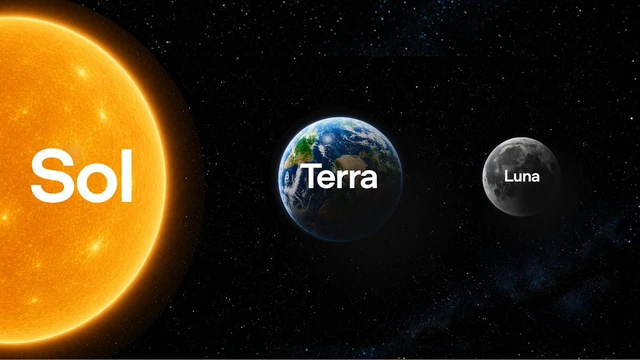
The artificial intelligence industry is entering an era of stringent regulatory oversight and granular product segmentation. OpenAI is gearing up to unveil the GPT-5.6 model family—a suite developed through close collaboration with U.S. regulatory bodies. The introduction of Sol, Terra, and Luna represents a strategic effort to reconcile raw computational power with economic viability. This release is poised to set a new benchmark for the integration of advanced cognitive functions into global business workflows.
This Thursday, July 9, OpenAI is unveiling the next generation of its large language models. Following a two-week closed beta limited to a select group of partners via API and Codex, the GPT-5.6 suite—comprising Sol, Terra, and Luna—is moving to general availability. For the enterprise sector, preview access is expanding globally effective immediately, signaling that the underlying infrastructure is now primed for mass-scale deployment.
The rollout of this model family has been characterized by an unprecedented level of regulatory scrutiny. According to Axios, the U.S. Department of Commerce granted regulatory clearance only after a series of rigorous audits conducted by the AI Standards and Innovation Center. OpenAI engineers were effectively embedded in Washington, D.C., to maintain a direct line of communication with government officials. Notably, the restricted access period in late June was implemented at the explicit request of the authorities, with the initial whitelist of users vetted on an individual basis by the government.
From a technical standpoint, GPT-5.6 is a stratified product line, with each model engineered to occupy a specific niche based on task complexity and budgetary constraints.
The flagship of the family is Sol. Designed for multi-step, cognitively demanding tasks, Sol introduces a new tier of "reasoning max" capabilities. Of particular interest is the "ultra" mode, optimized for sub-agent orchestration, which allows the system to delegate sub-tasks more efficiently within a single workflow. Sol is priced at $5 per million input tokens and $30 per million output tokens.
For users seeking an optimal equilibrium between performance and overhead, OpenAI has introduced Terra. While its capabilities are comparable to the previous GPT-5.5 iteration, its cost has been slashed by half: $2.50 for input and $15 for output. Rounding out the lineup is Luna, a streamlined, high-velocity version designed for maximum accessibility, with rates set at $1 per million input and $6 per million output tokens.
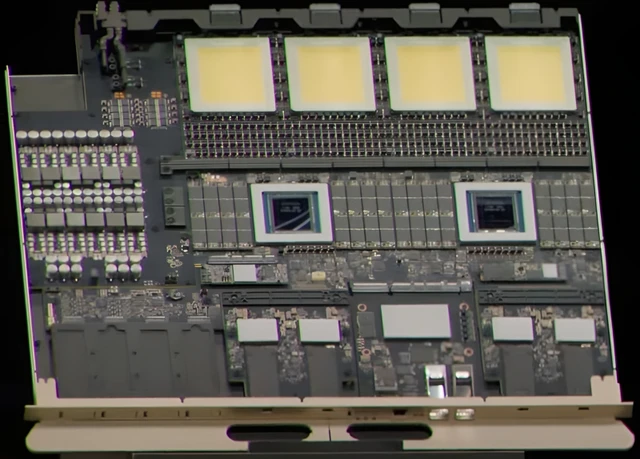
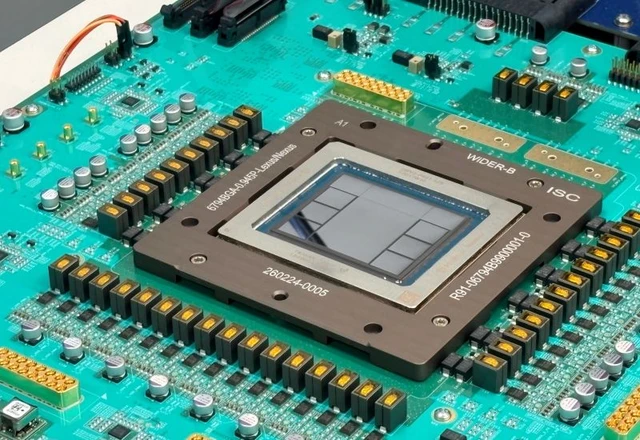
A significant engineering milestone is the integration of Sol with Cerebras hardware. By leveraging the unique Wafer-Scale Engine, generation speeds can reach a staggering 750 tokens per second. This capability will initially be available to a limited circle of clients as the company scales the necessary compute capacity.
The deployment of GPT-5.6 illustrates the emergence of a new paradigm of cooperation between Big Tech and the state. A similar approval process was recently navigated by Anthropic for its Fable 5 and Mythos 5 models. Despite the absence of a formalized regulatory framework, these companies are operating within the strategic trajectory established by the latest AI executive order from the Trump administration. The fact that OpenAI secured approval in such a condensed timeframe suggests a growing alignment between developers and regulators.
The official launch is expected around 20:00, adhering to OpenAI's traditional release schedule.
 The Evolution of Rendering in DLSS 4.5