The AI revolution is pivoting the industry's focus, shifting from raw computational power toward the critical architecture of data storage. While the DRAM segment was the first to feel this surge, NAND flash memory is now taking center stage, emerging as a critical nexus for the operation and training of Large Language Models (LLMs). Kioxia and SanDisk are responding to this shift with massive investments in manufacturing capacity across Japan—a strategic maneuver that underscores the inextricable link between physical storage volume and the scalability of modern neural networks.
For years, the prevailing narrative suggested that GPU and RAM manufacturers would be the primary beneficiaries of the AI surge. However, the architecture of modern machine learning systems demands colossal volumes of non-volatile storage to process massive datasets and preserve model checkpoints. This specific demand has become the catalyst for Kioxia and Sandisk, who have announced plans to invest $31.4 billion into expanding NAND production.
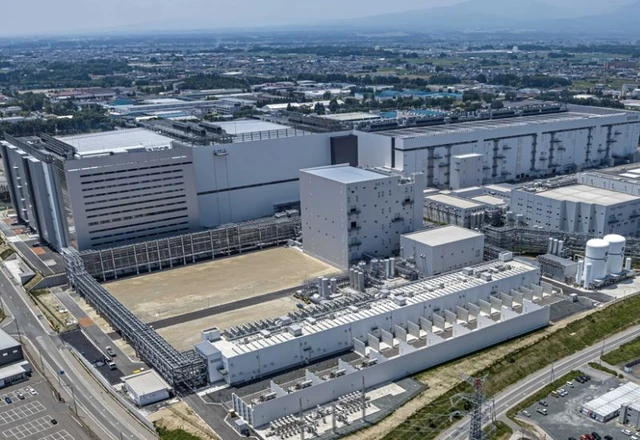
A substantial portion of this capital will be directed toward the development of the Kitakami complex in the Iwate Prefecture. The centerpiece of this expansion is the construction of a third production facility, slated for commissioning by 2029. This is not merely a quantitative expansion, but a strategic qualitative pivot: the new lines will specialize in high-performance memory optimized specifically for server-grade infrastructure.
The scale of the project is so vast that it transcends corporate interests, evolving into a matter of national economic security for Japan. The companies have already entered high-level dialogues with the government, including meetings with Prime Minister Sanae Takaichi. Japan's Ministry of Economy, Trade and Industry (METI) is prepared to act as a co-investor, potentially covering up to one-third of the construction costs for the Kitakami plant. Such state support underscores Tokyo's ambition to reclaim its dominance in the semiconductor sector and reduce reliance on external supply chains.
Kioxia's financial strategy for the coming years is decidedly aggressive. In the current fiscal year, the company intends to increase capital expenditures by 60%, bringing them to $2.8 billion, and maintain this high investment pace over the next three years. This signals a willingness to embrace significant risk to capture a larger share of the Enterprise SSD market.
Yet, the market landscape remains volatile. Despite an impressive 80% surge in second-quarter revenue—reaching $10.72 billion—Kioxia's global market share has contracted to 13.6%. This is the paradox of the modern market: while the company is earning more, its relative standing is declining as competitors, including the US-based Micron Technology, scale at an even faster rate.
To optimize resources, Kioxia is segregating its production sites by functional specialization. The complex in the Mie Prefecture will continue to serve the consumer-grade market, producing memory for smartphones and personal devices. Meanwhile, the Iwate site will become a dedicated hub for the server segment, where requirements for reliability, storage density, and data access speeds are orders of magnitude higher.
Ultimately, the investment cycle undertaken by Kioxia and Sandisk is an attempt to synchronize production capacity with the exponential trajectory of AI requirements. In a world where data has become the "new oil," the ability to scale storage rapidly and cost-effectively is becoming as critical a competitive advantage as the number of TFLOPS packed into a single chip.
 iPhone 17: Dominating the Global Market