The global race for artificial intelligence supremacy is transcending the traditional boundaries of superpower rivalry. Egypt has unexpectedly emerged as the flashpoint of a high-stakes confrontation between Huawei’s strategic expansion and Washington’s countermeasures. This is not merely a dispute over hardware procurement; it is a geopolitical struggle for influence over the digital sovereignty of the Global South. The outcome of this standoff will serve as a crucial litmus test for the export viability of Chinese AI accelerators.
Huawei has made a strategic gambit by bidding to build the data center infrastructure for the Egyptian government. This move represents a calculated attempt by the Chinese tech giant to propel its flagship AI accelerators onto the global stage, positioning Egypt as a strategic foothold for further expansion across Africa. In Washington, the initiative has been viewed as a significant provocation, triggering the urgent preparation of a counter-proposal.
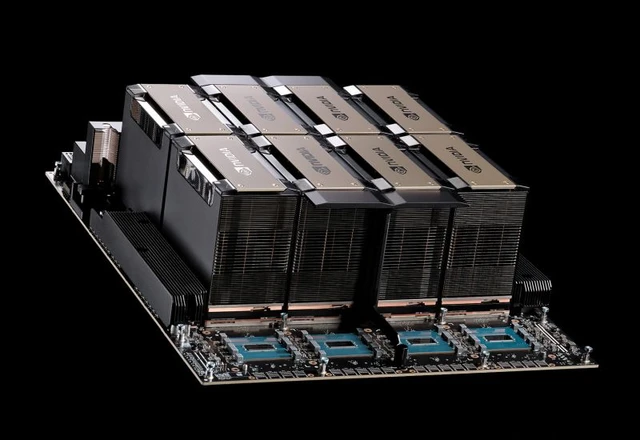
The technical specifications of Huawei's proposal are strikingly precise: the company plans to supply 1,408 flagship Ascend 950 accelerators, designed for compute-intensive neural network training in cloud environments, and 600 Ascend 910B chips, optimized for inference—the process of deploying and running pre-trained models. The entire infrastructure rollout is slated for a 12-month window. While a cluster of two thousand accelerators is considered relatively modest by modern standards—where the largest Western systems operate with tens or hundreds of thousands of chips—the precedent itself is what matters for Huawei. A successful contract would validate genuine international demand for the Ascend line and prove the company's ability to scale deliveries beyond its domestic market.
Washington's response was immediate. Recognizing the scale of Beijing's ambitions, the Trump administration initiated the formation of an American consortium. The State Department called upon Nvidia, AMD, and Microsoft to align their efforts and craft a competitive bid. Consequently, Egypt has found itself at the epicenter of "semiconductor diplomacy," where U.S. national interests are directly intertwined with the commercial opportunities of its leading tech titans.
However, Huawei's expansion extends beyond mere hardware. The company is partnering with iFlytek, another entity under U.S. sanctions. Their joint proposal includes the implementation of facial and vehicle recognition systems, as well as a "situational awareness" suite. In essence, they are proposing the creation of a unified digital urban command center, providing panoramic, real-time surveillance and control over the city environment.
This strategy mirrors Huawei's historical playbook in telecommunications equipment from decades prior: securing a foothold in emerging markets through government contracts. Similar attempts were previously made in the Gulf states and Southeast Asia, though limited chip production capacity and U.S. pressure hindered these efforts. For instance, Malaysia, which had planned to build a national AI system based on Chinese silicon, was forced to pivot away from the idea under pressure from Washington.
The situation in Egypt is further nuanced by the country's drive toward radical digital transformation; according to its national strategy, AI's contribution to the economy is targeted to reach 7.7% of GDP by 2030. Simultaneously, Egypt lacks domestic accelerator production, and access to cutting-edge American chips is constrained by export controls.
In response, the White House is pivoting its tactics. Rather than simply tightening restrictions—which could inadvertently push developing nations further into China's embrace—the U.S. is proposing an export assistance program for integrated AI solutions, potentially backed by government financing. The objective is clear: to create an economically attractive alternative to low-cost Chinese infrastructure, ensuring that nations of the Global South do not fall into a state of technological dependence on Beijing.
The outcome of the Egyptian tender will now serve as a bellwether for the effectiveness of the American strategy to support its exporters, and whether Huawei can break through its isolation to turn its proprietary developments into a global standard.
 iPhone 17: Dominating the Global Market