The global smartphone market has entered an era of paradoxes, where a general decline in demand coexists with an aggressive surge in the premium segment. This trend reached its zenith in the second quarter of 2026, unveiling a fundamental structural shift in consumer behavior. Apple has masterfully capitalized on this momentum, positioning the base model of its flagship lineup as the undisputed leader in sales. Such dynamics signal a broader recalibration of perceived device value, driven by global component shortages and evolving vendor strategies.
The contemporary mobile device market is navigating a period of significant volatility. According to data from Counterpoint Research, overall smartphone sales declined by 11% in the second quarter of 2026. One of the underlying catalysts for this downturn was a global shortage of RAM, which compelled manufacturers to recalibrate their product lineups, pivoting their focus toward key mass-market and premium models. In this climate, Apple and Samsung have effectively solidified their duopoly; the top five positions in the global rankings are split between these two brands, representing a combined market share of 26%.
Apple has demonstrated remarkable resilience, posting a 5% year-over-year increase in sales. Of particular note is the company's strategic inroads into the markets of India, Japan, and the Middle East and Africa. In South Korea—traditionally a bastion for its rivals—sales nearly doubled, a direct result of the success of the iPhone 17 series.
The primary driver behind the triumph of the base iPhone 17 was the strategic narrowing of the feature gap between the standard version and the Pro models. Consumers perceived the base device as the ideal sweet spot of value and performance, allowing the model to capture 6% of the total global market. Simultaneously, demand for the iPhone 17 Pro and Pro Max remained consistently high, bolstered by aggressive trade-in programs and flexible financing schemes. The general rise in electronics pricing effectively incentivized a migration toward the premium tier, where the device's value is justified by its longevity and status.
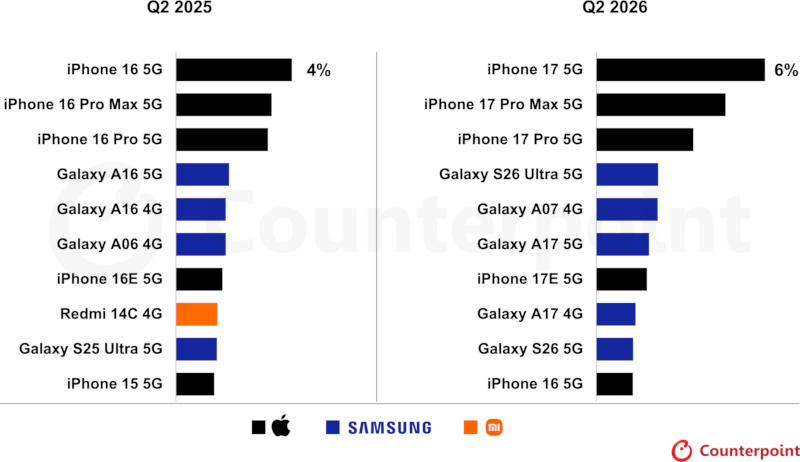
Parallel to this, Apple successfully penetrated the entry-level segment with the iPhone 17e. The model became a commercial hit in the US and Japan by offering MagSafe and expanded memory while maintaining the previous year's price point. This allowed the company to capture a price-sensitive audience that was nonetheless unwilling to compromise on modern standards of convenience.
Samsung, for its part, pivoted toward technological dominance and intelligent services. The Galaxy S26 Ultra emerged as the best-selling Android smartphone. An adjustment in the S26 series' launch window relative to its predecessor resulted in the primary sales surge hitting specifically in the second quarter. Consumers were attracted not only by the hardware specifications but also by the seamless integration of AI features and enhanced on-screen privacy protocols.
Samsung's 2026 strategy shifted toward a strategic consolidation of resources around flagship solutions, allowing the company to offset rising operational expenditures. However, the Galaxy A series remains a critical pillar of the brand's stability. As the device replacement cycle continues to lengthen, the promise of software support for six years or more has become a powerful competitive advantage, securing the loyalty of the mass-market consumer.
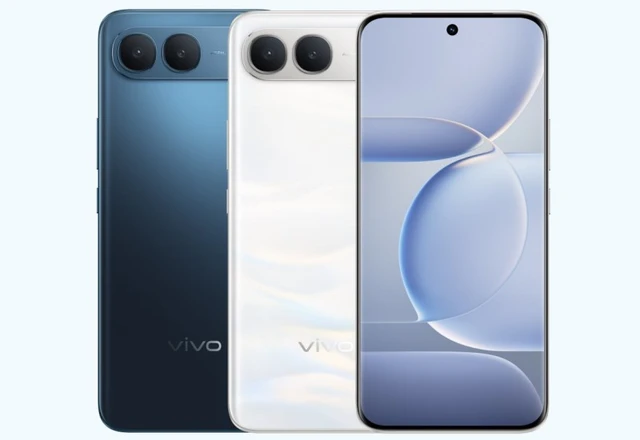 The Endurance Potential of the Vivo V80 Lite 5G