The global smartphone market has entered a period of protracted and painful decline, forcing top analysts to pivot toward weekly monitoring to keep pace with the volatility. A systemic supply crisis, coupled with the escalating cost of critical components, has forged an environment where survival is reserved for tech giants boasting the most diversified supply chains. While the majority of brands are hemorrhaging market share, the industry is confronting the urgent need to overhaul the very paradigm of device production and release. This is no mere temporary correction, but rather a signal of a deep-seated transformation within the consumer sector.
The current state of the mobile device market has reached a level of volatility where standard quarterly reports are no longer representative. Analysts at Counterpoint Research have pivoted to weekly sales tracking, and the resulting data is sobering: demand has seen a steady decline for nine consecutive weeks. By the twentieth week of the year, the total global market volume had contracted by 8%, signaling a systemic crisis affecting nearly every player in the industry.
However, within this general decline, a clear stratification is emerging. Market leaders are demonstrating remarkable resilience, leveraging the crisis to further consolidate their dominance. Apple, maintaining its position as the volume leader, recorded a 10% year-over-year increase. Even more striking are the results from Huawei, which saw growth surge by 23%. This sharp spike is attributed not only to an aggressive reentry into the domestic Chinese market but also to a strategic pivot toward component sovereignty, allowing the company to minimize its exposure to external shocks. Samsung Electronics also displayed high adaptability; its sales dipped by a mere 1%, which, in the current climate, is effectively a mark of stability.
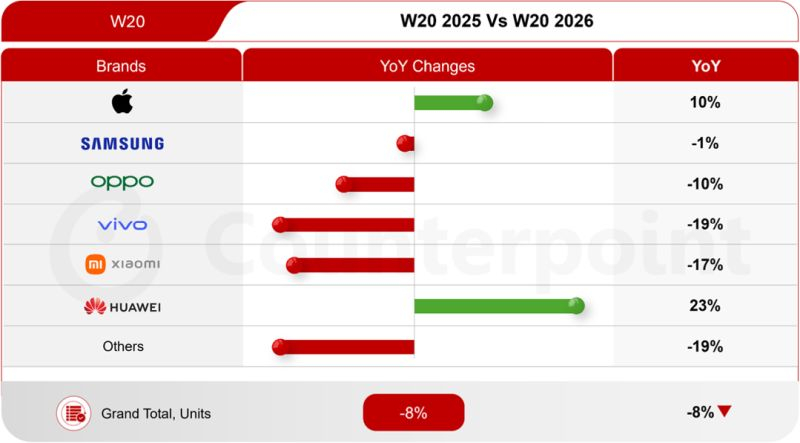
Conversely, other Chinese giants—long considered the primary engines of industry growth—now find themselves in a precarious position. Oppo, Vivo, and Xiaomi have faced a significant exodus of consumers, with sales plummeting by 10%, 19%, and 17%, respectively. The primary driver of this volatility has been an acute scarcity of memory and the skyrocketing cost of semiconductor components.
The memory crisis has acted as a filter, separating global powerhouses from regional players. The largest corporations, possessing immense fiscal clout and long-term supplier contracts, are navigating the shortage far more effectively. This creates a dangerous precedent: the chasm between the "Big Six" and the rest of the manufacturers is only widening. For companies outside this elite circle, the situation is catastrophic, with sales volumes collapsing by 19%.
The outlook for the near future remains grim. As memory costs continue to climb, manufacturers will be forced to implement measures that inevitably penalize the end consumer. The industry is already discussing "portfolio optimization," which in practice means streamlining model lineups—reducing the number of devices released and, more critically, implementing strategic spec-downscaling on certain models to preserve profit margins.
Beyond technological stagnation, the market is bracing for a revision of announcement schedules and hardware refresh cycles. The era of groundbreaking annual flagship releases may give way to a more cautious, incremental strategy. The culmination of these trends will be an inevitable rise in retail prices—a trajectory already hinted at by Apple’s leadership, effectively legitimizing price hikes for smartphones worldwide.
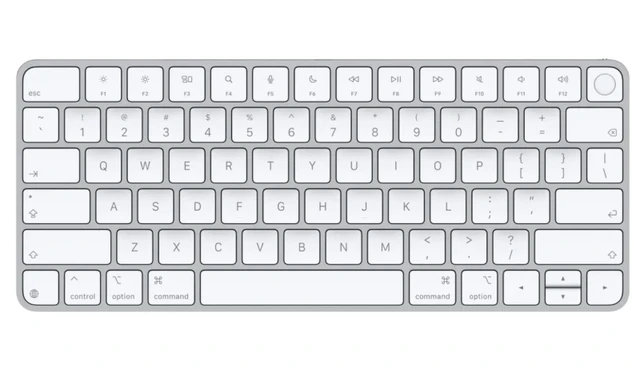 The Visual Minimalism of Apple's New Keyboards