Mobile photography has entered an era of absolute convergence, where the gap between the industry's titans is rapidly vanishing. By 2026, the battle for camera supremacy has shifted; the crude megapixel race has given way to the nuanced realm of sophisticated processing algorithms and color science. Identifying the true leader requires a rigorously objective methodology—one that strips away brand prestige and the noise of marketing hyperbole. This study takes the form of an extensive blind test featuring the most ambitious flagships of the modern era.
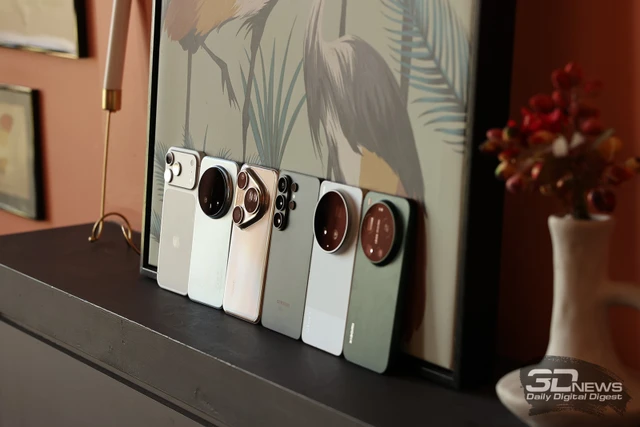
The modern smartphone market has reached a plateau where the spec sheets of flagship cameras appear nearly identical. However, beneath these sterile figures lie fundamentally different philosophies regarding the interpretation of reality. This clash brings together the industry's heavyweights: the Apple iPhone 17 Pro Max, Samsung Galaxy S26 Ultra, HONOR Magic 8 Pro, Xiaomi 17 Ultra, vivo X300 Ultra, and the HUAWEI Pura 80 Ultra. The latter, despite being the predecessor to the upcoming Pura 90 series, remains the benchmark that every competitor is forced to reckon with.
To ensure maximum experimental integrity, a blind testing methodology was employed. This is the only way to neutralize the cognitive bias that occurs when a user subconsciously favors an image simply because they know which brand produced it. To standardize the variables, a few surgical adjustments were made: the iPhone was set to JPEG to eliminate conversion artifacts from HEIF, while skin retouching levels on the Samsung and HUAWEI devices were locked at a medium setting.
The first phase of the evaluation focused on ambient light. This baseline scenario reveals the true dynamic range of the sensors and the algorithms' ability to render natural colors. Testing spanned the entire spectrum of focal lengths—from ultra-wide angles to extreme 10x zoom. It is here that the divergence in how manufacturers handle the detailing of small objects and the rendering of spatial depth becomes most apparent.
Sunset photography proved particularly revealing, as the cameras were forced to contend with the stark contrast between a brilliant light source and deep shadows. This is where the true power of computational photography manifests: the ability to preserve highlight detail without transforming the shadows into a canvas of digital noise.
Indoor environments presented a different challenge—combating complex mixed lighting. The discrepancies in color reproduction and white balance are most evident here. As the smartphones attempt to adapt to artificial light sources, each brand's "visual DNA" emerges, ranging from a drive toward hyper-realism to a more artistic idealization.
By 2026, night photography has ceased to be a separate mode. Modern flagships have integrated multi-frame exposure directly into the primary capture process. "Night mode" now operates invisibly, merging multiple frames in a fraction of a second. The primary challenge here is to preserve the natural atmosphere of the night without turning it into artificial daylight, all while maintaining sharp contours under minimal illumination.
Portraiture remains one of the most subjective domains. Evaluation here extends beyond image quality to the efficacy of subject separation algorithms and the naturalism of synthetic bokeh. Tests included full-body, waist-up, and close-up shots, including those taken in nocturnal urban settings, to verify autofocus precision and the accuracy of skin tone rendering.
The most divergent approach was observed in macro photography. The industry has split into two distinct camps. HUAWEI, vivo, and Xiaomi bet on dedicated telephoto lenses with a minimum focusing distance, allowing for highly detailed shots with a natural perspective. Apple, Samsung, and HONOR rely on ultra-wide modules, which produce a different visual effect and impose different lighting requirements.
The culmination of this extensive study will be a community vote. By stripping away EXIF metadata and randomizing the order of the images, participants will be forced to judge based solely on aesthetics and technical execution. The results of this experiment will establish an objective ranking where victory is determined not by brand prestige, but by the actual quality of every single pixel.
 The Evolution of Rendering in DLSS 4.5