Global volatility across the semiconductor market is dealing a severe blow to the mobile industry's most vulnerable segment. The skyrocketing cost of memory chips is fundamentally disrupting the economics of entry-level device production, rendering the manufacture of budget handsets nearly unsustainable. Manufacturers are now caught in a stark dilemma: raise retail prices and risk alienating their customer base, or consciously compromise on hardware specifications. This trajectory marks the beginning of a structural shift in the accessibility of modern technology.
The modern smartphone market is entering a turbulent phase of transformation, driven primarily by the shortage and escalating cost of memory components. For budget devices priced under $400, this issue has evolved from a mere overhead concern into a full-blown existential crisis. According to analytical data from Omdia, the cost of RAM and flash storage within the bill of materials (BOM) for entry-level devices has reached critical thresholds.
In the ultra-budget segment (devices under $99), memory expenditures now consume up to 64% of all material costs. In the $100 to $400 category, this figure stands at approximately 59%. Such a disproportion is an anomaly; traditionally, the System-on-Chip (SoC) accounted for the lion's share of the cost. However, current market conditions have shifted the financial center of gravity toward memory modules, the prices of which have effectively doubled over recent quarters.
The $400 mark has become a "point of no return." Once this threshold is crossed, manufacturers find that legacy profit models are no longer viable. Given the high price sensitivity of budget-conscious consumers, any increase in retail price triggers a sharp decline in demand. Consequently, the industry is adopting a strategy of proactive retreat: sales of smartphones priced below $400 are expected to contract by 22%. Simultaneously, shipments of premium models (above $400) are projected to grow by roughly 5.7%, signaling a gradual "hollowing out" of the low-end price segment.
To maintain any semblance of margin, Android vendors are forced to implement radical hardware optimizations. This will not manifest as evolutionary progress; rather, it is a calculated simplification.
In the near future, the following trends will become prominent in budget lineups:
— A reduction in screen diagonals and display quality to lower overall expenditures.
— A shift toward "flexible" camera configurations, which in practice means smaller physical sensors and the removal of secondary modules.
— The widespread adoption of previous-generation processors, which are significantly cheaper to procure.
While this approach allows manufacturers to stabilize pricing, it effectively strips the user of the technological progress the market has grown accustomed to over recent years. The budget smartphone is ceasing to be a "stripped-down flagship" and is instead becoming a tool with a bare-minimum feature set, where every cent saved in the specifications becomes a matter of the product's survival on the retail shelf.

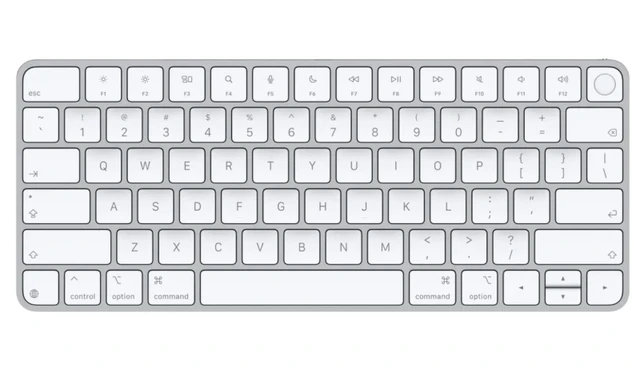 The Visual Minimalism of Apple's New Keyboards