The world stands on the precipice of a technological paradigm shift capable of fundamentally redefining our concepts of labor and value. A coalition of preeminent economists and researchers warns that the pace of artificial intelligence integration is outstripping any historical precedent. While tech giants paint a picture of a digital utopia, the academic community highlights the looming risks of systemic instability and the wholesale displacement of human capital. The critical challenge today is no longer the raw computational power of these models, but rather the void of institutional frameworks necessary to govern this transition.
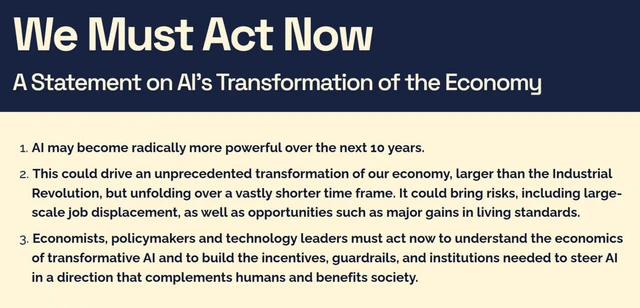
Contemporary economic theory is confronting a challenge of staggering proportions. An open letter signed by two hundred leading AI experts and researchers—including sixteen Nobel laureates—has emerged as an urgent manifesto of alarm. The document’s central thesis is stark: humanity is entering a decade of unprecedented transformation, one that may surpass the Industrial Revolution in its systemic impact, yet unfold within a significantly more compressed timeframe.
Historical context is critical here. While the transition to steam power and factory production spanned decades, allowing society to adapt through the gradual evolution of social norms and educational standards, the digital revolution is occurring almost instantaneously. This velocity creates a critical lag between technological capability and the capacity of state institutions to respond. The primary risk is not merely the automation of routine tasks, but a potential systemic destabilization of the labor market, where the rate of job displacement could outpace the creation of new professions.
Consequently, the expert community is calling for the immediate establishment of safeguards and new institutional frameworks. The objective is to ensure that AI serves as a tool for human augmentation rather than total substitution. This necessitates a rigorous analysis of the economic repercussions of neural network integration and the development of policies that ensure productivity gains are distributed equitably, preventing them from concentrating solely in the hands of platform owners.
However, there is no absolute consensus within the expert community regarding the nature of this growth. Nobel laureate Christopher Pissarides has expressed profound skepticism about AI's ability to restore the era of rapid productivity growth to Western economies. In his view, those days may be gone for good, and an uncritical reliance on a "technological miracle" could be a fundamental error.
Pissarides openly critiques the optimistic forecasts championed by industry leaders such as OpenAI’s Sam Altman and Nvidia’s Jensen Huang. While corporate executives paint a picture of exponential efficiency gains, macroeconomic data has yet to show tangible evidence of significant productivity growth on a global scale. This disconnect between the marketing narratives of tech giants and statistical reality underscores the urgent need for an objective, independent audit of AI's impact on the global financial system before the world is swept into an uncontrollable social shift.
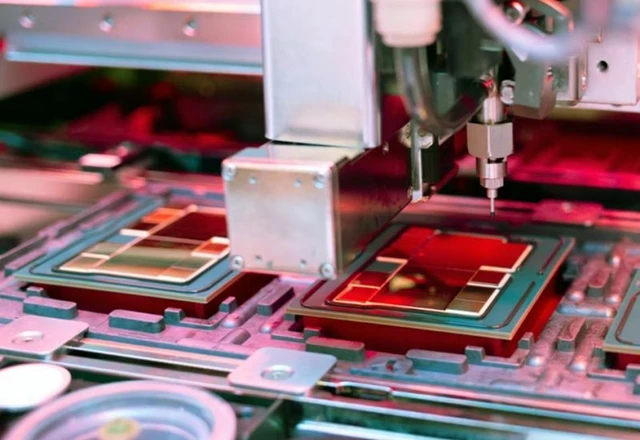 Intel’s Strategic Play for Advanced Packaging Supremacy