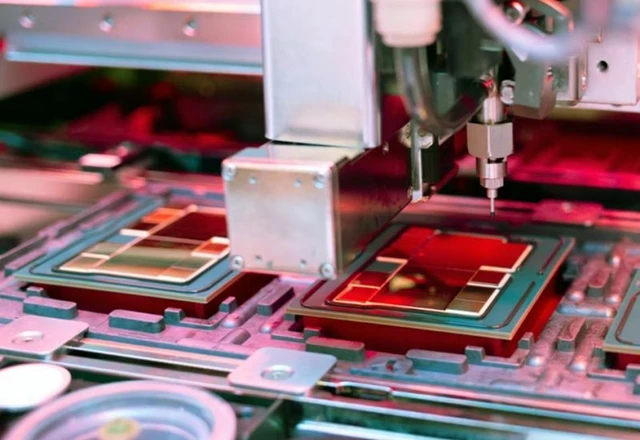
The personal computing landscape is undergoing a fundamental shift toward the local execution of resource-intensive neural network models. For years, the primary bottleneck has been the scarcity of VRAM in consumer-grade hardware, effectively forcing users to rely on cloud-based services. The arrival of AMD’s Strix Halo chips, featuring a unified memory architecture, promises to dissolve this boundary. The new Acemagic F9A workstation stands as one of the first tangible implementations of this paradigm, transforming the mini-PC into a powerful, full-fledged tool for LLM deployment.
The evolution of compact computing has reached a tipping point where the term "mini-PC" no longer suffices; these devices are evolving into full-fledged workstations. At the forefront of this shift is the Acemagic F9A, powered by the AMD Ryzen AI Max+ PRO 495. This system is built upon the new Strix Halo platform, which radically reimagines on-die resource allocation by merging CPU and GPU capabilities into a single, unified memory fabric.
The technical specifications are formidable: 16 Zen 5 cores and 32 threads, boosting up to 5.2 GHz, deliver top-tier performance for heavily multi-threaded workloads. However, the real breakthrough lies in the Radeon 8065S graphics subsystem. Featuring 40 RDNA 3.5 compute units clocked at 3.0 GHz, it effectively replaces mid-to-high-end discrete GPUs while consuming significantly less power and occupying a fraction of the space.
The pivotal architectural leap is the implementation of LPDDR5X-8533 unified memory with a 256-bit interface. Supporting capacities up to 192 GB, the system can allocate as much as 160 GB directly to graphics and AI workloads. In traditional architectures, such VRAM capacity was reserved exclusively for prohibitively expensive enterprise-grade accelerators. Now, this level of power has been condensed into a chassis with a volume of just 2 liters.
The real-world implications of this approach are evidenced by the ability to run massive Large Language Models (LLMs) locally, such as DeepSeek V4 Flash 284B. While standard consumer GPUs are bottlenecked by 16 or 24 GB of VRAM, the F9A can handle datasets that previously required an entire GPU cluster. While final generation speeds will depend on quantization levels and software stack optimization, the mere fact of autonomous operation with these parameters represents a paradigm shift for AI developers and researchers.
Despite its compact footprint, the device makes no concessions regarding connectivity. The I/O suite includes two USB4 ports and dual 2.5GbE Ethernet adapters, making the station suitable for sophisticated network environments. Support for Wi-Fi 7, HDMI 2.1, and DisplayPort ensures modern imaging standards, while the inclusion of a PCIe 4.0 x4 OcuLink port paves the way for high-speed external storage or additional hardware expansion.
For those who do not require extreme memory capacities, an alternative configuration based on the Ryzen AI Max+ 395 is available. This version features Radeon 8060S graphics and supports up to 128 GB of unified memory. In doing so, Acemagic is creating a versatile product line that effectively migrates professional workstation capabilities into a compact desktop footprint, heralding an era where AI becomes an intrinsic and entirely local component of the professional workflow.

 The Horizon of China's Technological Sovereignty in Lithography