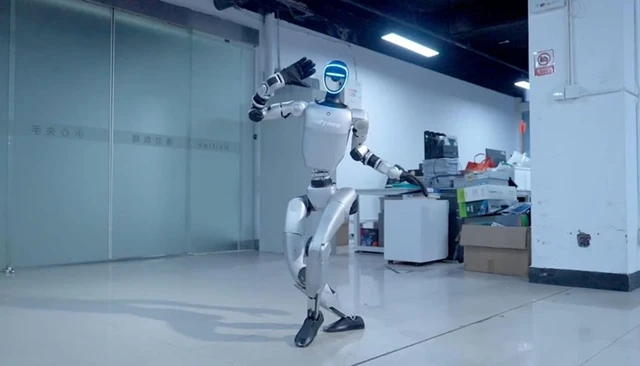
The race to develop general-purpose humanoid systems is shifting from the confines of private laboratories to the public stage. A massive tournament in Beijing has evolved beyond a mere competition; it is now a global stress test for the current state of autonomy algorithms. At stake is the resolution of the "last meter" challenge—the critical transition from curated demonstrations to practical, real-world utility. This event heralds a new era in robotics, one where efficacy is measured not by the elegance of the code, but by the precision and quality of physical interaction with the environment.
Beijing’s National Speed Skating Oval has become the epicenter of a high-stakes technological showdown. From August 22 to 26, the venue hosts the World Humanoid Robot Games, an event of staggering proportions: 2,056 machines representing 666 teams from 16 countries, including tech giants from the US, Japan, and Germany. Yet, China’s dominance is absolute. The overwhelming majority of participants hail from Chinese corporations, research institutes, and universities, underscoring the nation's strategic imperative to lead the global automation race.
The tournament's programming marks a quantum leap over previous iterations. The number of competitions has nearly doubled, expanding to 51 disciplines with over a thousand matches. The scope of challenges has broadened from traditional athletics to complex cognitive tasks. Robots now compete in table tennis, weightlifting, long jump, and even tug-of-war—tasks that demand not only stability but a sophisticated capacity for dynamic load distribution.
The most pivotal shift this year is a rigorous overhaul of autonomy standards. Organizers have effectively declared war on remote operation; in most events, it is now strictly prohibited. This forces developers to rely exclusively on onboard decision-making systems and real-time sensory analysis. Even in fundamental disciplines like the 100-meter sprint, the requirements have tightened—the time limit has been slashed from three minutes to one, demanding significantly higher responsiveness and kinematic precision from the control systems.
Beyond athletic prowess, there is a heightened focus on real-world application scenarios. These trials have expanded from six to twenty-one, requiring robots to operate across nine distinct simulated environments—ranging from sterile factory floors and libraries to the chaotic flux of shopping malls and hotels. Here, the true test is the machine's ability to navigate unstructured spaces and adapt to unpredictable obstacles.
A dedicated segment of the competition focuses on fine motor skills—one of the most daunting frontiers in modern robotics. Tasks such as cable routing and tool assembly require surgical precision and advanced haptic feedback. These capabilities are the ultimate litmus test for whether a machine can truly replace human labor in complex technical processes.
Ultimately, these games are less about crowning a champion and more about identifying a commercially viable product. The goal is to bridge the "last mile"—that critical gap between a successful laboratory prototype and a robot's ability to function effectively within the real economy. Once machines master this transition, competitive medals will inevitably translate into market contracts, evolving humanoid robots from costly novelties into a productive workforce.
 The Price of Acceleration: CXMT’s Rapid Push into Memory