The contemporary vision of the "smart home" is evolving, shifting its focus from mere convenience and comfort toward the management of fundamental biological necessities. Once the responsibility for pet nutrition and hygiene is delegated to algorithms, a technical glitch ceases to be a mere inconvenience; it becomes a critical threat to survival. A recent failure within the Petlibro ecosystem has starkly highlighted the chasm between marketed promises of resilience and the actual performance of cloud-dependent services. This incident raises a fundamental question regarding the extent of our reliance on centralized control systems within the sanctity of our private living spaces.
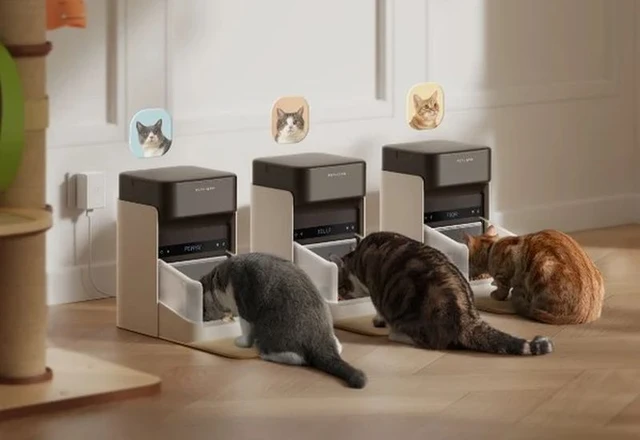
For pet owners, home automation has long evolved beyond a mere collection of convenient gadgets. For those who are frequently away due to professional obligations or travel, smart feeders and automated litter boxes have become the primary guarantors of their pets' physiological well-being. However, the deep integration of such devices into a unified digital ecosystem creates a single point of failure that can paralyze the entire care process.
Petlibro, a company specializing in intelligent feeding and hygiene systems, recently suffered a large-scale technical collapse. Users began reporting en masse that their devices had ceased following programmed feeding schedules. In scenarios where animals were left without direct human supervision, this glitch escalated into a critical emergency.
Of particular interest is the discrepancy between the manufacturer's claims and the actual operational experience. Petlibro management insisted that schedule data is stored directly in the devices' local memory, which should ensure autonomous operation even during server outages. In practice, however, the opposite occurred: devices either ignored internal timers or ceased functioning entirely. The problem proved to be systemic—beyond feeders, failures were recorded across automated water fountains and self-cleaning litter boxes.
Parallel to the hardware malfunctions, the management software failed. The Petlibro mobile app became inaccessible for a significant portion of the user base, stripping them of the ability to remotely monitor their pets or attempt to manually trigger a food portion. This highlights a critical flaw in many modern IoT solutions: an overreliance on cloud management (Cloud Dependency), where even the most basic device functions become hostages to remote server availability.
The restoration of functionality was phased and fraught with difficulties. By mid-week, the company announced that the majority of services were back online; however, some users continued to experience issues with authorization and device connectivity.
This incident serves as a stark reminder of the necessity for robust Edge Computing implementations, where mission-critical functions must remain entirely autonomous from external networks. In a world where technology is entrusted with the basic needs of living beings, the reliability of local command execution is no longer just a technical requirement—it is an ethical imperative.
 The Evolution of Apple's Augmented Reality Ecosystem