The modern gaming industry has fully pivoted to the "Games as a Service" (GaaS) model, where users effectively rent access to content rather than owning it. This transformation has sparked a profound conflict between corporate control and the consumer's right to preserve digital heritage. At the heart of this clash lies California Assembly Bill 1921, which calls into question the legitimacy of server shutdowns and the legality of fan-led preservation efforts. The debate over whether private servers constitute an act of archival preservation or a legal infringement exposes a deep-seated crisis regarding the very concept of ownership in the digital age.
The modern gaming ecosystem suffers from a systemic vulnerability: any online product can vanish in an instant at the whim of its publisher. When a company shutters its central servers, thousands of players lose access to content they paid for, effectively turning expensive software into useless data. This precariousness is the catalyst for California Senate Bill AB 1921. The proposed legislation suggests a radical shift in developer accountability, mandating that companies notify users of impending shutdowns and ensure games remain playable via an offline mode. Should such a transition prove impossible, developers would be required to issue refunds to consumers.
This initiative has met fierce resistance from the Entertainment Software Association (ESA), the powerful lobbying arm representing the largest publishers and developers in the US. The ESA’s position, articulated by Vice President Jennifer Gibbons, centers on the threat of "over-regulation." From the industry's perspective, the demand for refunds is viewed as absurd, as it ignores the years of utility the user derived from the product. Essentially, corporations are arguing that a game's value is exhausted through its use; therefore, the right to ownership post-support cannot be monetized or guaranteed.
The debate intensified when it shifted toward game preservation via community-run servers. During hearings, committee members questioned whether third-party servers could technically sustain projects after their official "death." Minecraft and Call of Duty were cited as prime examples—titles that already rely heavily on infrastructure deployed by the community.
The ESA’s reaction was unexpectedly severe: private servers were explicitly labeled as tools of piracy and part of a "video game black market." The lobbyists argued that because these systems are not controlled by Microsoft or Mojang, they cannot guarantee security standards. In doing so, the community's attempt to preserve gameplay was equated to the illegal misappropriation of intellectual property.
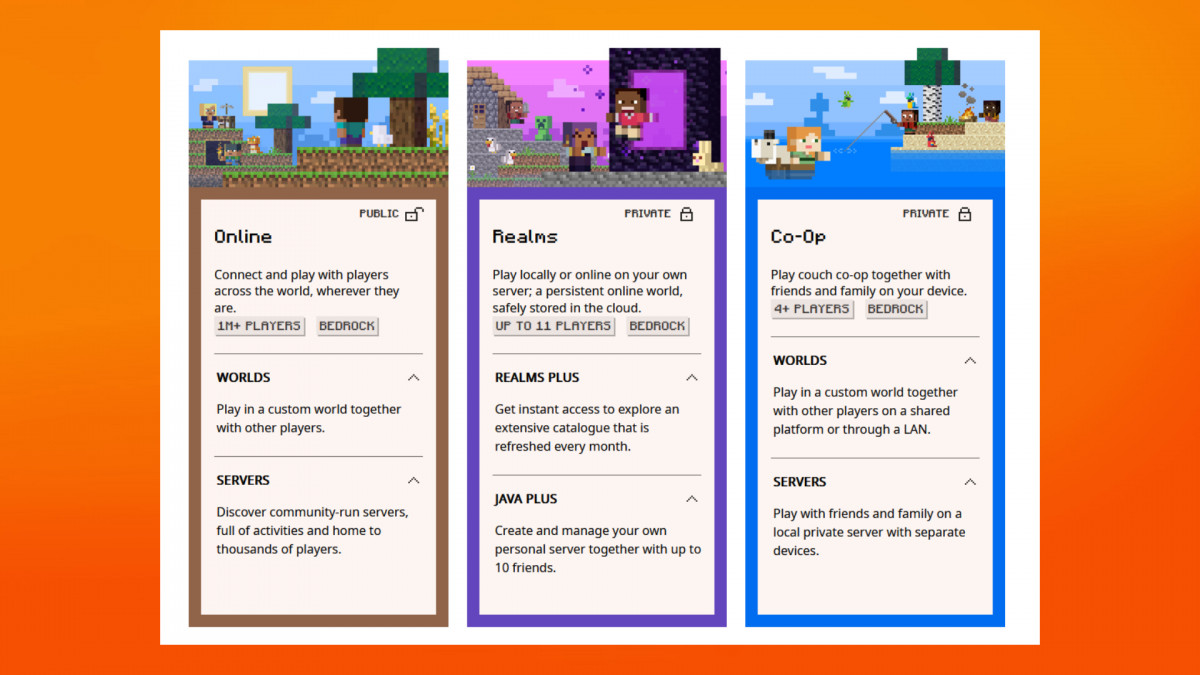
However, this narrative clashes sharply with actual market practices. Minecraft presents a clear dichotomy: while industry representatives label private servers as piracy in legislative halls, Microsoft and Mojang actively encourage their creation. Official game resources provide instructions on interacting with community servers, and developers offer specialized software to launch them. Consequently, the very tools defined as "piracy" by the ESA are, in practice, part of the product's official toolkit.
This conflict transcends legal disputes, entering the realm of digital philosophy. Markus Persson, the creator of Minecraft, previously championed player rights, articulating a fundamental paradox of modern distribution: if purchasing a game no longer equates to owning it, then piracy ceases to be theft. In this framework, private servers become the sole defense against "digital oblivion," evolving from tools of copyright infringement into instruments for preserving the cultural heritage of gaming.
 The Price of Acceleration: CXMT’s Rapid Push into Memory